Showing posts with label prime Minister. Show all posts

Pakistan, US struggle to define their relationship

In the aftermath of the secret US raid to kill Osama bin Laden, Pakistani officials want a detailed agreement spelling out US rules of engagement inside Pakistan, officials in both countries say, but Washington's refusal to sign a binding document threatens to create another point of friction in the long-troubled relationship.

It will take some time for Pakistan to improve relations with the US, seriously strained after the Osama bin Laden’s killing, Pakistan’s Prime Minister Yousuf Raza Gilani said on Wednesday.

Pakistan military officials want the US to sign what is called a "memorandum of understanding”, an agreement they want to include such details as the number of CIA operatives working in Pakistan, notification before US drone strikes, intelligence gathered and a written promise about Pakistan's role if al Qaeda's new leader, Ayman al-Zawahri, is found in Pakistan.

The surge in trouble this year between Pakistan and the US began with the February killing of two Pakistanis by Raymond Davis, a CIA-contracted American spy working without Pakistan's knowledge. Davis pleaded self-defence but it took weeks of wrangling before he was released in exchange for so-called "blood money" paid to the dead men's relatives.

The bin Laden raid further infuriated the Pakistani military, which saw it as a violation of Pakistani sovereignty, and it now feels it needs the agreement to ensure it would be involved in — or be able to stop — any similar US attacks in the future. The agreement would also allay fears in Islamabad that the CIA is operating behind Pakistan's back, and shore up the military's reputation, which was badly battered when the US helicopters slipped into Pakistan air space undetected for the bin Laden attack.

But former and current American officials say the US will not commit any specifics to paper because it could limit the flexibility of its operations. Instead, the US is preparing a broad statement of principles that could be completed in the coming weeks.

Another senior US official said that while Pakistan would not get all the information it wants about US intelligence operations, it gets much more than Washington gives most other countries.

Similar negotiations are taking place between the US and Afghanistan, with Afghan officials seeking detailed guarantees on the future of US troops and aid, but Americans insisting on a vague agreement.

In Pakistan, the US is negotiating with the civilian government, it's not clear whether the country's powerful military establishment would veto a broad statement of principles.

Relations between Pakistan's spy agency, the ISI, which falls under the military command, and the CIA hit rock bottom after the bin Laden raid. Pakistanis were particularly angered by then-CIA director Leon Panetta's stinging comments the ISI was either incompetent or complicit in not finding bin Laden, who was hiding not far from Islamabad. Two senior Pakistani officials, including a former security officer, said Panetta sought to assuage Pakistan Army Chief General Ashfaq Pervez Kayani with an apology following those statements.

Pakistan, US struggle to define their relationship Yet Panetta's words continue to reverberate. Pakistani officials fret that there were will be repeat of the bin Laden raid if al-Zawahri is found in Pakistan. They also worry about the new director of the CIA, David Petraeus, who Pakistani officials say has a frosty relationship with Kayani.

Petraeus wanted the ability to take the fight into Pakistan while serving as military commander in Afghanistan, according to a Pakistani official says and a former senior US official. Now that he has the authority to run covert operations at the CIA, the Pakistani official says his government fears he might decide to ramp up unilateral operations in Pakistan.

Without an agreement, Pakistani officials say there were will only be an atmosphere of distrust.

But US officials counter that while relations have sunk very low, the CIA and the ISI have never stopped sharing intelligence, with one saying the relationship is getting "incrementally better”. They point to information sharing with the FBI from local law enforcement after the August 13 kidnapping of an American in the Pakistani city of Lahore.

And on important fronts like securing Pakistan's nuclear weapons, the US and Pakistan continue to cooperate.

Madras HC gives lease of life to Rajiv killers

The Madras high court on Tuesday stayed for eight weeks the hanging of the three convicts sentenced to death for conspiring to assassinate former prime minister Rajiv Gandhi.

Hearing the petitions filed by Murugan alias Sriharan, T Suthendraraja alias Santhan and AG Perarivalan
alias Arivu that their death sentence be commuted, the high court ordered an interim stay on the hanging pending disposal of the case.

The court has ordered notice to the union government returnable in eight weeks.

On Aug 11, President Pratibha Patil rejected the mercy petitions of Murugan, Santhan and Perarivalan - all linked to the Liberation Tigers of Tamil Eelam (LTTE) - and sentenced them to death for their involvement in Gandhi's 1991 assassination.

Rajiv Gandhi, who was prime minister 1984-89, was killed by a suicide bomber called Dhanu at an election rally in Sriperumbudur near Chennai May 21.

Fourteen other people also lost their lives in the blast.

The three condemned prisoners, who were due to hang September 9, had on Monday moved the high court to commute their sentence to life imprisonment.

Arguing for Perarivalan, senior counsel Ram Jethmalani said the clemency petition was rejected by the President after 11 years and the delay is prima facie wrong.

He said a notice seeking explanation for the delay should be sent.

Urging speedy disposal of mercy petitions, Jethmalani had said earlier that if there was a delay of two years, then the death sentence would be commuted to life imprisonment. This provision was later changed.

Japan's Parliament Confirms Noda as Prime Minister

Japan's parliament voted Tuesday to confirm Yoshihiko Noda as the nation's sixth prime minister in five years.

Mr. Noda, who as finance minister has steered the nation's economy through one of its most difficult periods, was approved in both the lower house, where his Democratic Party of Japan has a solid majority, and in the opposition-controlled upper house.

Outgoing Prime Minister Naoto Kan and his Cabinet resigned earlier Tuesday, making way for Mr. Noda to name his own team later this week.

LDP lawmakers on Monday elected Mr. Noda as party leader to replace Mr. Kan, who stepped down amid widespread criticism of his handling of the crisis caused by a massive earthquake and tsunami in March.

After his election, Mr. Noda made an immediate plea for unity in his divided party. Addressing party lawmakers from both chambers at a Tokyo hotel, he called on the Democrats to close ranks and stop bickering as they face tough challenges. 

Mr. Noda stressed the importance of cooperation in addressing the nation's troubled economy, recovery from the March disasters, and ending the nuclear crisis from the damaged Fukushima power plant.  

As an ally of the outgoing Mr. Kan, Mr. Noda is likely to continue many of his predecessor's policies. He is also considered a staunch supporter of the Japan-U.S. security alliance.

In Washington, a spokeswoman for the U.S. State Department, Victoria Nuland, said the United States is looking forward to continuing close cooperation with Japan and its next prime minister across a broad range of issues.

Mr. Noda will have to deal with a deeply divided parliament.  While the ruling party has a solid majority in the lower house, the upper house is in the hands of the opposition Liberal Democratic Party and in a position to block any legislation.

Mr. Noda is expected to seek a coalition with the Liberal Democrats and a third party, but it is not clear whether the LDP will be willing to cooperate.

More than 20,000 people are dead or missing from March's earthquake and tsunami, and thousands more have been displaced from homes near the Fukushima nuclear plant.

Across Japan, homes and factories are operating on reduced power as the government conducts safety tests on all of the country's nuclear reactors.

A Bomb Blast in Baghdad's largest Sunni mosque

A suicide bomber blew himself up inside Baghdad's largest Sunni mosque on Sunday night, killing 29 people during prayers, a shocking strike on a place of worship similar to the one that brought Iraq to the brink of civil war five years ago.

Iraqi security officials said parliament lawmaker Khalid al-Fahdawi, a Sunni, was among the dead in the 9:40 p.m attack.

Maj. Gen. Qassim al-Moussawi, a spokesman for Baghdad's military operations command, confirmed the bombing happened inside the Um al-Qura mosque during prayers in the western Baghdad neighbourhood of al-Jamiaah. The blue-domed building is the largest Sunni mosque in Baghdad.

That the bomber detonated his explosives vest inside the mosque is particularly alarming, as it is reminiscent of a 2006 attack on a Shia shrine in the Sunni city of Samarra that fueled widespread sectarian violence and nearly ignited a nationwide civil war. In that strike, Sunni militants planted bombs around the Samarra shrine, destroying its signature gold dome and badly damaging the rest of the structure.

No group immediately claimed responsibility for Sunday's bombing, but suicide attacks generally are a hallmark of al-Qaeda, which is dominated by Sunnis. Intelligence officials have speculated that al-Qaeda will do almost anything to re-ignite sectarian violence, but the group recently had focused on attacking Iraqi security forces and the government to prove how unstable Iraq remains.

Two security officials and medics at two Baghdad hospitals put the casualty toll at 29 dead and 38 wounded. All spoke on condition of anonymity because they were not authorized to release the information.

Al-Moussawi put the death toll at only six and said there was no significant damage to the mosque. Conflicting death tolls are common immediately after attacks in Iraq.

In a statement early Monday, Prime Minister Nouri al-Maliki called on Iraqis to stand strong against terrorists and "pursue them wherever they are."

"Solidarity and unity, and standing as one line behind the army and the police, are the only way to eliminate this danger, which does not differentiate between the Iraqis and targets all of us," al-Maliki said.

The attack hit Sunnis who were praying in a special service during the holy Muslim month of Ramadan, which ends Tuesday. It demonstrates anew that security measures to protect Iraqis as U.S. forces prepare to leave remain riddled with gaps, and shows the extent to which militants want to extend violence even as the eight-year U.S. presence winds down.

Close race seen to select next Japanese leader

A close race emerged Saturday among the men seeking to replace Prime Minister Naoto Kan and lead Japan as it emerges from its worst disaster since World War II, with five declaring their candidacy for the ruling party's top spot.

Kan announced Friday he would resign after serving nearly 15 months that have been plagued by ruling party infighting, gridlock in parliament and clamorous criticism of his administration's tepid initial reponse to the March 11 earthquake and tsunami and ensuing nuclear crisis.

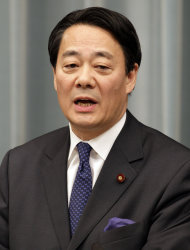
A new leader is to be chosen Monday. Public opinion polls show that the favorite to replace Kan is former Foreign Minister Seiji Maehara, but Trade Minister Banri Kaieda has emerged as a strong contender said he was backed by veteran party power broker Ichiro Ozawa.

The Japanese public, yearning for political unity and resolve in the wake of the disasters, has grown disgusted with the squabbles and blame-trading that have dominated parliamentary sessions.

The five members of the ruling Democratic Party of Japan who declared their candidacies after Kan's announcement planned to hold news conferences and debates Saturday and Sunday. Then, the party's 398 members of parliament were to vote Monday to choose the new party chief, who will almost certainly become prime minister because of the party's majority in the more powerful lower house.

Kan's successor will become Japan's sixth prime minister in five years, perpetuating the high turnover in political leadership even as the country grapples with a sluggish economy, an aging population and the enormous reconstruction effort after the country's triple disaster.

So far, candidates running for party chief have spelled out little about their vision for post-tsunami reconstruction or other serious issues, such as tackling the bulging national debt. Most of them also have not taken a clear stance on the future of atomic power despite growing public worries about meltdowns at the Fukushima Dai-ichi nuclear power plant.

In the murky world of faction-dominated Japanese politics, they seem more concerned about getting votes from fellow party members and shoring up their base of support, experts say.

The party leadership race could end up as a duel between the relatively young and telegenic Maehara, the former foreign minister, and Kaieda, the economy minister, who reportedly has the backing of party stalwart Ozawa.

A China hawk, Maehara, 49, gained prominence by taking a firm stand toward Beijing during a territorial spat last year over some disputed islands in the East China Sea. He is strongly pro-Washington and supports a close security alliance with the U.S.

Other candidates in the party leadership race include Finance Minister Yoshihiko Noda, who has spent recent weeks contending with the yen's record appreciation that is hurting Japan's exporters, former Transport Minister Sumio Mabuchi and Farm Minister Michihiko Kano.

After Monday's party vote, the new Cabinet could be installed as early as Tuesday.

Japan PM to resign, successor race wide open

The race to pick Japan's sixth leader in five years was wide open on Friday after a scandal-tainted party powerbroker looked likely to refuse to back the most popular candidate just days before a vote.

Prime Minister Naoto Kan, who came under fire for his response to the massive March tsunami and the radiation crisis it triggered, confirmed his intention to step down at a gathering of ruling Democratic Party of Japan lawmakers, clearing the way for the party to pick a new leader on Monday.

"In a severe environment, I did what I should have done," Kan told party MPs after resigning as party head. He added he would work to achieve his vision of a society that does not rely on nuclear power.

His successor faces huge challenges, including a strong yen seen as a threat to the export-reliant economy, rebuilding from the devastation of the March disasters, ending the radiation crisis at a crippled nuclear plant, forging a new energy policy, and curbing huge public debt while funding the bulging social welfare costs of an ageing society.

Whether and when to raise taxes to curb a public debt already twice the size of Japan's $5 trillion economy is a focus of debate in the leadership race, but any decision by Ozawa on who to back is seen as likely to be decided more by his hopes of boosting his clout than by policy positions.

It was unclear if Ozawa, who heads the DPJ's biggest group despite suspension of his party membership over a funding scandal, would back an existing candidate such as trade minister Banri Kaieda or seek a new contender to support.

There is even speculation Ozawa might back Finance Minister Yoshihiko Noda, the most fiscally conservative of the current contenders.

Ozawa long ago proposed raising the sales tax to fund social welfare costs but in recent years has promoted populist policies to give consumers more spending power.

Most other candidates agree on the need to curb debt but are cautious about the timing of a sales tax hike and oppose higher levies for rebuilding from the March disasters.

"I've known Mr. Ozawa for 43 years and he has never acted based on policies," ruling party elder Kozo Watanabe told Reuters in a recent interview.

But in a sign of how divided the party has become, the Yomiuri quoted a source close to Ozawa as saying: "We definitely cannot trust Mr. Maehara."

Maehara promises to focus economic policy on promoting growth and beating deflation and is the most popular with voters among seven contenders jostling for the nation's top job.

But only DPJ lawmakers can vote in the Aug. 29 party leadership race, the winner of which becomes premier because of the party's majority in parliament's lower house. Should no candidate win a first-round party vote, a run-off will be held between the top two contenders.

DPJ voter support has sunk as it struggled to implement policies in the face of internal feuds and an opposition able to block bills in the upper house.

Maehara and Noda have both floated the idea of a "grand coalition" with the main opposition Liberal Democratic Party (LDP) and its former partner, the New Komeito party, to break the legislative impasse. But both parties have been cool to the idea.

Kan pledged in June to step down but had not specified when. He confirmed his intention to resign on Friday after parliament's upper house enacted two key bills -- one to let the government issue more debt and another to promote renewable energy.

Debate on Jan Lokpal Bill unlikely today

The Lok Sabha was all set to debate three versions of the Lokpal Bill, Parliamentary Affairs Minister Pawan Kumar Bansal said the debate on the Jan Lokpal Bill is unlikely to take place today.

"I can't say anything, in today's schedule, nothing is mentioned. So, it'll be decided after the discussion. So, I can't say anything right now," Bansal told.

When asked about the last discussion that took place to end the impasse over the Lokpal Bill, Bansal said: "I was not part of that discussion, so I can't say anything."

Meanwhile, the Congress Party and the government has expressed concern that social activist Anna Hazare may not call off his fast even after the three versions of the Lokpal Bill are tabled.

Sources in the party and the government have reportedly revealed that they want an assurance from Team Anna that he will end his fast once the Bills are tabled.

On Thursday, Hazare placed three conditions before the government, which is inclusion of lower bureaucracy in the Lokpal bill, appointment of Lokayuktas in all states, and implementation of citizen's charter in government offices.

"If there is agreement on all these three issues then I can consider ending my fast, but not protest," he said.

"The fight against corruption must continue even after I die. The Prime Minister has appreciated our movement in the Parliament. I thank the parliamentarians, who appreciated the movement," said Hazare.

"The government sent one of its ministers to me. Prime Minister says he is worried about my health. Why did he take 10 days to think? Discussion should start on Lokpal from tomorrow in Parliament. Lokayukta must be brought under Lokpal. The lower bureaucracy must be brought under the ambits of Lokpal and the citizen's charter must be formed," he added.

Hazare's health down but refuses hospitalization

With Anna Hazare's fast for a strong Lokpal Bill entering its eighth day today, India's top cardiac surgeon Dr Naresh Trehan, who is examining the veteran social activist's health condition, has said that his vital signs are worrying and the blood pressure is not normal.
Doctors earlier advised Hazare not to venture into the Sun as it could have a negative impact on his health.

Hazare has, however, refused to be admitted to the hospital.His blood count is deteriorating. And we suggested to him that he be shifted to hospital. But he outright refused. He (Hazare) said, 'I would rather die.'

Hazare said, 'I consulted my inner conscience... My inner conscience does not allow me to take saline drips.'

'It doesn't matter if I die,' he said, as aides standing near him bowed their heads, some with tears in their eyes.
'If I die, so many Annas will emerge,' he added, pointing his hand towards the roaring, flag-waving crowds.
'If they try to take me away forcibly, park yourself at the gates and don't let me taken away,' he said, as the mass of supporters again roared in his support.

'But there should be no violence,' Hazare went on. 'Whatever we do should be done non-violently. Violence is a crime.'

Speaking about Hazare's health, his key aide Manish Sisodia earlier in the day said that he had shed 600 grams of his weight.

"Look he (Anna Hazare) has not eaten anything since past seven days. He has become weak, but in the morning when doctors came for his check-up, his blood pressure was 124/82, his weight has decreased by 600 grams since yesterday and his current weight is now 66.4 kilograms. His pulse rate is 84. According to doctors his condition is stable although, he has become weak but he is not serious," said Sisodia.

The cardiologist said a team of specialists, including a cardiologist, kidney specialist and critical healthcare experts, were keeping a watch on Hazare.

The Prime Minister, Dr. Manmohan Singh, has also written a letter to Hazare urging him to end his fast.

Dr. Singh in his letter to Hazare said the government is committed to passing a constitutionally valid and the best possible Lokpal legislation with inputs from civil society with the broadest possible consensus.

PM : Anna's attempts to impose Jan Lokpal Bill misconceived

Prime Minister Manmohan Singh made a strong statement in Lok Sabha on the Anna Hazare standoff on today morning, defending the Delhi Police's decision to arrest the Gandhian and calling the social activist's attempts to impose his Jan Lokpal Bill on Parliament as "totally misconceived".

Meanwhile, Anna Hazare, his team and their ever-swelling supporters dug their heels in and outside the Tihar Jail, demanding the government give in to all conditions for their fast at Jai Prakash Narain Park in central Delhi.

“All of us agree that the Lokpal Bill should be passed by Parliament. The question is who drafts the law and who passes the law,” Singh said.

“It is the sole prerogative of Parliament to make laws and government has gone by well-settled principles,” the Prime Minister said.

He said Team Anna must allow elected representatives of the people to do their job.

The Prime Minister detailed before members the sequence of events that led to Anna Hazare's arrest, saying his detention and that of his colleagues' was a “preventive measure” as they had rejected several key security suggestions by the Delhi Police.

Singh said the government “acknowledges” the right of citizens to hold peaceful protests, but reiterated Hazare refuses to come out “unless the government gives him an undertaking that he would be allowed to fast at Jai Prakash Narain park”.

Ignoring loud grumbles from the Opposition, Singh appealed to all political parties to ensure that Parliament functioned smoothly.

Indian Activist Refuses to Leave Jail

In the continuing standoff between the government and anticorruption activist Anna Hazare, he remained in jail late Tuesday night after his arrest earlier in the day as he prepared to go on a public hunger strike to push for stronger anti-corruption legislation, Delhi police said.

Rajan Bhagat, spokesman for the Delhi police, said the police issued an "unconditional release warrant" for Mr. Hazare and his aides late Tuesday night. An aide to Mr. Hazare who was released told that Mr. Hazare has said he won't leave until he receives "written assurance" from the government that he will be allowed to go ahead with his plan for the hunger strike.

Anna Hazare was arrested early Tuesday morning under a temporary legal provision that bans public gatherings and protests at a New Delhi park where he was planning to hold his hunger strike, Mr. Bhagat said. He added the prohibition was issued after Mr. Hazare refused to agree to the police's conditions for allowing the protest, including restricting the fast to three days and limiting the number of protesters at the site to 5,000.

Prime Minister Manmohan Singh on Monday said the government was committed to acting against corruption and that it wanted a "strong Lokpal to prevent corruption in high places."

Addressing the nation on India's Independence Day, Mr. Singh said those who disagree with the version of the bill in Parliament had the right to do so, but "they should not resort to hunger strikes and fasts unto death."

Hazare effect: Non-UPA parties join ranks

Slamming the government over the arrest of Anna Hazare and his team, BJP-led NDA, Left and several other Opposition parties on Tuesday joined ranks and demanded a statement by Prime Minister Manmohan Singh on "violation of democratic rights". As Hazare was arrested and sent to Tihar Jail,
leaders of BJP, JD, Shiv Sena, CPI, CPI, Samajwadi Party, RJD and some other non-UPA parties held a meeting to discuss common strategy over the issue and came up with a vow to continue their agitation in Parliament against corruption.

"It has been decided that the Prime Minister should make a statement in both Houses of Parliament on whatever is happening in the country. Nobody else," Leader of Opposition in Lok Sabha Sushma Swaraj said.

She said the demand for the Prime Minister's statement will be made tomorrow and it will determine Parliament's functioning.

Contending that action against Hazare reflected the government's "nervousness", she said the Opposition unity was not on jan lokpal bill but "violation of democratic rights".

Leader of Opposition in Rajya Sabha Arun Jaitley alleged the government was "trying to snatch people's right to protest" and said "the political leadership is trying to hide behind uniform".

Amid indications that Parliament would not be allowed to function, Jaitley said the impeachment proceedings against Calcutta high court judge Soumitra Sen on Wednesday will take place as per schedule at 3pm.

Slamming the government, CPI said it has "attacked the democratic right to conduct peaceful protest" and asked its party units to conduct peaceful agitation against it

After Hazare's detention, Manmohan Singh calls cabinet meet

Prime Minister Manmohan Singh has scheduled an emergency meeting of the cabinet Committee on Political Affairs in Parliament House at 10.15 a.m. Today following the detention of Gandhian activist Anna Hazare in the morning.

The meeting will take stock of the situation arising out of Hazare's detention by the Delhi Police early morning, hours before he was set to proceed on an indefinite fast demanding a stronger Lokpal Bill to deal with the corrupt.

Others scheduled to attend the meeting include Home Minister P. Chidambaram, Finance Minister Pranab Mukherjee, Defence Minister A.K. Antony and Agriculture Minister Sharad Pawar, officials in Prime Minister's Office said.

External Affairs Minister S.M. Krishna, Renewable Energy Minister Farooq Abdullah, Human Resource Development Minister Kapil Sibal and Railway Minister Dinesh Trivedi are also scheduled to attend the meeting, they added.

Hazare, 74, had announced Sunday he would proceed with his indefinite fast at the Jai Prakash Narain Park near Feroz Shah Kotla Stadium close to the old quarters of the city. The Delhi Police had imposed prohibitory orders there.

He was detained along with some 250 of his supporters including activist Arvind Kejriwal and former top cop Kiran Bedi. Some of them were taken into custody from other places in the city.

'Don't let my arrest stop this movement. This is the nation's second struggle for freedom. The entire world has come to know how deep rooted corruption is,' Hazare had said in a statement, minutes before his detention.

'I appeal to you that let there be no violence in this movement. I also appeal to you, young and old alike, to give eight days of your life to the nation - if necessary for a jail bharo andolan .'

His supporters, who were detailed from various places, described the police action as unconstitutional.

After three nights Police calm London Riots

On Aug-4 Police investigating gun crime in the black community shoot 29-year-old Mark Duggan after stopping him in a taxi in Tottenham, north London. He dies at the scene after the shooting. Britain's police watchdog opens an inquiry into the fatal shooting.

Rioters have looted shops, set fire to buildings and clashed with police in three nights of disorder in London.

Now London remained largely quiet with a heavy police presence on the streets but unrest spread across central and northern England on a fourth night of violence that has blighted the David Cameron government's image and ability to hold the 2012 London Olympics safely.

With 16,000 police officers deployed in London, the streets remained calm after three previous nights of rioting.

But there was unrest in Manchester, Salford, Liverpool, Wolverhampton, Nottingham, Leicester and Birmingham with shops being looted and set alight.

So far 768 people have been arrested and 105 charged in connection with violence in the capital.

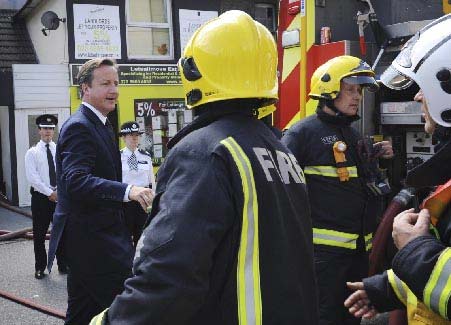
British Prime Minister David Cameron said he would recall parliament from its summer recess for a day on Thursday after rioting swept through London for three consecutive nights.

Talking tough, the Prime Minister, who rushed home after cutting short his vacation in Italy, said the culprits will be brought to bear the consequences of their actions and the government was determined to see that justice is delivered to the law abiding citizens.

Deputy Assistant Commissioner Stephen Kavanagh said, never before fired to deal with riots in England - would be "considered carefully" in the event of further disorder. Sporadic violence has broken out in several cities around England last night.

Bomb Blast in Oslo (Narway)

A gunman dressed in police uniform opened fire at a youth camp of Norway's capital in Oslo ruling political party on Friday, killing at least 80 people. After Hours a bomb attack near the office of Norwegian Prime Minister's building.

The bomb, which shook the city centre in mid-afternoon, blew out the windows of the prime minister's building and damaged the finance and oil ministry buildings. Prime Minister Jens Stoltenberg, who was not in the building at the time.

The cause of the blast was unknown but the tangled wreckage of a car was outside one building and the damage appeared consistent to witnesses with that from car bombs. Police and fire officials declined comment on the cause.

David Lea, Western Europe analyst, at Control Risks said: "It's very difficult to tell what has happened. There certainly aren't any domestic Norwegian terrorist groups although there have been some al Qaeda-linked arrests from time to time.

Right-wing militancy has generated sporadic attacks in other countries, including the United States. In 1995, 168 people were killed when Timothy McVeigh detonated a truck bomb at a federal building in Oklahoma City.

NATO member Norway has been the target of threats before over its involvement in conflicts in Afghanistan and Libya.

Violence or the threat of it has already come to the other Nordic states: a botched bomb attack took place in the Swedish capital Stockholm last December and the bomber was killed.

In Oslo, the building of a publisher which recently put out a translation of a Danish book on the cartoon controversy was also affected, but was apparently not the target.


The Oslo district attacked is the very heart of power in Norway. Nevertheless, security is not tight in a country unused to such violence and better known for awarding the Nobel Peace Prize and mediating in conflicts, including the Middle East and Sri Lanka.