Showing posts with label Supreme Court. Show all posts

SC to decide on acquittal of 26/11 accused

The Supreme Court will on today hear the petition filed by the Maharashtra government challenging the acquittal of Faheem Ansari and Sabauddin Ahmed, the alleged Indian conspirators of the 26/11 Mumbai terror attack.

Former Solicitor General Gopal Subramaniam and Special Public Prosecutor Ujjwal Nikam will argue the case on behalf of the Maharashtra government.

The petition filed through advocate Sanjay Karabia has challenged the February 21 Bombay High Court order upholding their acquittal by the trial court. The two were acquitted for want of corroborative evidence.

The High Court had, however, confirmed the conviction and death sentence awarded to the lone surviving Pakistani terrorist Ajmal Kasab.

Kasab has also moved the Supreme Court challenging his conviction and death sentence in the 26/11 attacks.

The High Court had upheld the death sentence of Kasab for the "brutal and diabolical" 26/11 Mumbai attacks aimed at "destabilising" the government.

Kasab's death penalty was upheld on charges of criminal conspiracy, waging war against the nation, IPC section related to murder and under sections of Unlawful Activities (Prevention) Act.

166 people died in the Mumbai attacks on November 26, 2008, following which Kasab and two Indian nationals were tried by a special court in Mumbai. Within a year, the special court gave Kasab death on five counts, while the accused Indians, Ansari and Shaikh, were let off for lack of evidence.

Rajya Sabha set to impeach Justice Soumitra Sen

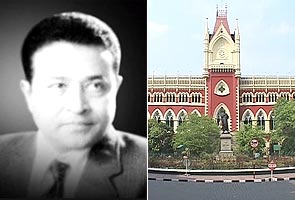
Rajya Sabha will be converted into a court on Wednesday for its first impeachment proceeding against a judge as it takes up a motion against Justice Soumitra Sen of the Calcutta high court.

The Upper House will make history when it initiates the process against the controversial judge who has been held guilty on corruption charges by a specially constituted committee.

53-year old Sen will be the second judge against whom impeachment proceedings will be initiated when Rajya Sabha takes up the motion.

The first such case involved the impeachment motion in Lok Sabha of Justice V Ramaswami of the Supreme Court in May 1993 which fell due to lack of numbers after Congress members abstained.

The discussion on the motion is likely to spill over to August 18 and the occasion is expected to be utilised by the Elders to express their views on judicial activism and overreach.

The first of the two grounds of misconduct against Sen being cited in the motion is misappropriation of large sums of money, which he received in his capacity as receiver appointed by the High Court.

The second ground is that he misrepresented facts with regard to the misappropriation of money before the High Court.

While CPM leader Sitaram Yechury will move the motion, Parliament sources said the judge, accompanied by about five lawyers including Subhash Bhattacharya, will present his case before the Bar.

Besides Yechury, the motion will also be moved by his party colleague Prasanta Chatterjee and Leader of Opposition Arun Jaitley.

The issue of the impeachment proceedings was also deliberated upon on Tuesday at the meeting of the Cabinet Committee on Political Affairs headed by Prime Minister Manmohan Singh.

As the Upper House is meeting for a judicial function, parties have restrained from issuing whips to direct members to vote in favour or against the motion.

At the same time, Congress has issued a three-line whip to its members in both the Lok Sabha and Rajya Sabha to be present.

Under the constitution, a judge of a high court or the Supreme Court can be removed by the President by a motion adopted in both the Houses of Parliament by two-thirds majority of the members present and voting. This exercise has to be carried out in the same session.

Sen, who has been held guilty on corruption charges by a panel appointed by Rajya Sabha Chairman Hamid Ansari, will be given 90 minutes to present his case. The Inquiry Committee comprised Justices B Sudershan Reddy, Mukul Mudgal and noted jurist Fali S Nariman.

After the motion is moved, Sen or his counsels will present the case and leave. A discussion on the motion will begin thereafter when the Rajya Sabha re-converts itself from being a court.

If the motions are approved, a reference would be sent to the President "to pass an order for the removal of the said Soumitra Sen from his office as a Judge of the high court at Calcutta."

If Justice Sen resigns before the Rajya Sabha takes up the impeachment proceedings, the motion will become infructuous.

Justice P D Dinakaran, Chief Justice of the Sikkim high court, against whom the Rajya Sabha Chairman had earlier set up a similar judicial panel to inquire into corruption charges, had resigned before the issue was taken up by the House.

Supreme Court stays Hasan Ali bail order

The Centre on Tuesday withdrew the demand for the recall of the July 4 Supreme Court order on black money and decided to settle for a mere modification of the direction to constitute a Special Investigation Team (SIT) to probe such cases.

The move came on a day the apex court stayed the release of Hasan Ali Khan, who had been granted bail by the Bombay High Court in a black money case.

A bench presided over by Justice Altamas Kabir stayed the operation of the high court order while issuing notice on an appeal by the Enforcement Directorate.

Listing the matter for hearing on Thursday, the court said the order granting bail should be on hold till then. Khan, who is facing charges of parking thousands of crores in foreign banks, was arrested after the Supreme Court's observations alleging inaction on part of the ED in the case.

In the earlier case, with the petitioners submitting that the government was seeking a review of the order in the name of modification, the bench observed that it would first hear arguments on maintainability of the application by the Centre.

Attorney General G. E. Vahanvati submitted before the bench that the government only wanted modification of "paragraphs 49 and 50" of the order. The paragraphs pertain to directions on constitution and working of the SIT on black money.

The Centre in its application filed earlier had sought "recall" of the order and modification of the directions. It had specifically alleged that paragraphs 1 to 20 of the order were written without hearing arguments.

The court had violated the principles of natural justice by not hearing it, the Centre had contended.

Senior counsel Anil Divan, appearing for petitioner Ram Jethmalani, objected to a paragraph in the application stating that then solicitor general Gopal Subramanium was not authorised to make admissions on behalf of the government.

Opposing the application, Divan said the government was seeking a review of the order but had filed an application for modification instead of filing a review petition. A review petition is decided in chambers without hearing the petitioner.

He said the Centre had served a fresh application on Tuesday in which it had sought modification of paragraphs 49 and 50. Incidentally, the term "recall" did not find mention in the new application. Divan said the government had not complied with the order despite there being no stay. "The Centre is brazenly in breach of all directions," he said.

Vahanvati stressed that the government now wanted limited relief.

On Divan questioning the very maintainability of the application, Vahanvati said: "I am ready for arguments on maintainability and even contempt." The matter will come up for hearing before the Supreme Court on August 24.

Prakash Jha moves SC against ban on 'Aarakshan'

Film producer Prakash Jha on today moved the Supreme Court to lift the ban on his film 'Aarakshan' in states of UP, Punjab and Andhra Pradesh.

, Jha in his writ petition said that the ban on 'Aarakshan' goes against the spirit of freedom of expression guaranteed by the Constitution,  advocate Ameet Naik told.

The matter is scheduled to come up for hearing at 2:00pm today.

According to report, Jha, who held a press conference in Mumbai on today, said he was ready to make minor changes in the film, respecting concerns voiced by different political bodies.

"We have agreed to make minor changes following objections. There are certain dialogues and scenes that have been edited. Reservation is not a necessity but a Constitutional truth and we have been very careful about depicting it in the film," Jha said.

The director said his film is not only about reservation but also deals with the commercialisation of education.

"It (the ban) could be because of political reasons. We are discussing the matter with people there. With a sensitive issue like this there is always doubt but we are trying to discuss and resolve it. What else can I do," he said.

The security for the film's lead cast--Amitabh Bachchan and Saif Ali Khan--has also been beefed up by the Mumbai police.


Bringing India flag to common man

It was on 9th August, last year, that the Bilaspur high court in a landmark judgment gave the common man the right to fly the national flag at night with due dignity. Earlier, in 2004, a Supreme Court judgment allowed the common man to fly the flag.

The Bilaspur judgment came on an auspicious day, as August 9 is also Kranti Din, the day the Quit India Movement was launched. "We thought this is the best day to organize a human chain to spread awareness about our right to fly our national flag day or night, with due dignity," says ad-filmmaker Jaiprakash Bhande, the founder-member of Project Tiranga Trust.

The group formed a human chain at Dadar, in front of Plaza theatre, and in Thane city, in front of Courtnaka rest house, for about two hours in the morning. Bhande decided to make people aware about their right to fly the national flag by setting up a group -Project Tiranga Trust during the Ayodhya verdict on September 30, 2010, along with some like-minded persons. The group distributed paper flags and sticker flags to passers-by at Dadar and Thane. The air was filled with the chants of Bharat Mata Ki Jai and Vande Mataram

Amar Singh in cash-for-vote scam

Delhi Police told the Supreme Court on Thursday that its investigations into the cash-for-vote scam made out a clear case under the Prevention of Corruption Act, with the needle of suspicion firmly pointing to former Samajwadi Party general secretary Amar Singh.

Suhail Hindustani, who was the alleged conduit for the payment of the bribe money, and some other personalities could face charges under Section 13 of the Prevention of Corruption Act read with Section 120B (conspiracy) of Indian Penal Code, Delhi Police sources said.

 Additional solicitor general Harin Rawal on Thursday made a mention of the report, filed in the registry, before a bench of Justices Aftab Alam and R M Lodha who are to hear the case on Friday.

The police sought further time to unravel the entire conspiracy and promised to keep the court updated periodically about the progress made in the investigations.

Delhi Police quickened its probe into the case after a rebuke from the Supreme Court for its lethargy in investigating the bribery scam.

Within days of the court pulling up Delhi Police on July 15 for being slack in investigating the two year-old case of serious consequences, police arrested Sanjeev Saxena, considered close to Amar Singh, and followed it by picking up Suhail Hindustani, who attempted to drag the PM and Congress leaders into the controversy.

On July 15, the court had criticized Delhi Police for its "inefficient and directionless" probe into the cash-for-vote scam, which had cast shadows on the Manmohan Singh government's confidence vote victory in Parliament in 2008.


After a Wikileaks disclosure pointing to use of bribes in the 2008 trust vote triggered a furore in Parliament, Prime Minister Manmohan Singh had attempted to blunt the opposition attack by saying a parliamentary committee had probed it and concluded that there was insufficient evidence to prove bribing of MPs. "I am convinced that taking the report as a whole, this is a correct inference," he had said on March 23 on the floor of Parliament.