Showing posts with label MONEY. Show all posts

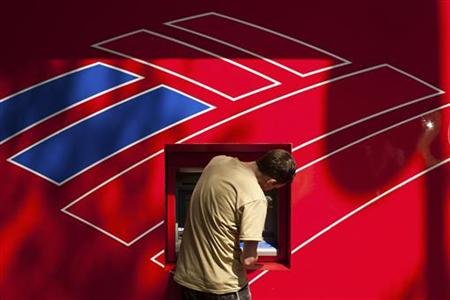
What the Bank of America shake-up means for you (BLOG)

NEW YORK (Reuters) - The recent executive shakeup at Bank of America followed by reports of massive layoffs at the bank may leave you wondering what the turmoil means for you - either as a client of the banking colossus and Merrill Lynch, the brokerage firm it owns, or as a shareholder.

As experts ponder these moves - which include the departure of Sallie Krawcheck, head of the bank's wealth management unit and Merrill's public face - they see a rocky period in the days ahead for the company's shareholders, but not necessarily its clients.

IF YOU ARE A MERRILL LYNCH CUSTOMER

What should Merrill customers do? If you like your financial adviser, a shake-up at the top shouldn't impact a good financial planning relationship. "This announcement does not affect how Merrill Lynch financial advisers interact with clients," says Selena Morris, a Bank of America spokesperson. "By reorganizing Bank of America around its three core client groups, the company is ensuring that it delivers the best of what it has to offer to clients."

Larry and Sandy Reed of Oak Park, Illinois, say they aren't going anywhere with their investments because the connection they have with the firm - and their adviser - is deep.

"We've worked with Merrill Lynch since 1981 because my uncle worked there at that time, and my grandfather had given us stock through Merrill Lynch for our wedding," Sandy Reed says. While she initially came to Merrill because of family ties, she takes comfort these days in Warren Buffett's decision to invest $5 billion in Bank of America last month.

The Reeds find other Bank of America headlines troubling, including those involving controversial mortgage practices at Countrywide Financial, which the bank purchased in 2008.

Existing clients should ponder whether Bank of America's financial woes will put too much pressure on the company to change its bottom line - meaning that Merrill's advisers may have a new agenda, such as pushing products that generate the most profits for the bank.

"Is the adviser doing what's best for me, or is the adviser doing what's best for the company?" says Jack Waymire, founder of Paladin Registry, an information services provider that rates financial advisers. "I would view Merrill Lynch more as a distribution system to sell products; in this environment, Bank of America just tells Merrill Lynch to sell its products."

That may not pose problems on its own. But Waymire, author of "Who's Watching Your Money?", believes Merrill Lynch and other big Wall Street firms now put their profits way ahead of investor gains.

"If you've got these household names handling your money, you may feel relatively safe," he says. "Merrill has all these resources, and they're using sales skills to convince you they're experts. The advisers are not even managing the money half the time. It's a big, big mess and it's not going to be cleaned up anytime soon."

The bank disagrees. "These comments are woefully dated and do not reflect the reality of how our financial advisers serve their clients," says Bank of America spokeswoman Morris. Nine out of 10 clients would recommend a Merrill adviser to their family and friends, she notes. "The average length of our relationship with clients is 13 years, and our client attrition rates are in the low single digits," adds Morris. "Our training program for advisers is the longest and most rigorous in the industry."

Moreover, Merrill Lynch "is hiring in a big way," says David A. Geracioti, editor in chief of Registered Rep magazine and RegisteredRep.com. This has generally meant forcing out financial advisers who produce less than $400,000 per year -prompting some defections of long-time Merrill advisers to the likes of HighTower, a Chicago-based aggregator of financial adviser firms.

For customers sticking with Merrill, such as the Reeds, there is good news: "Client assets have held up pretty well, all things considered," Geracioti says. "The only way Bank of America would spin out its best-performing unit is if it had to 'burn the furniture' to raise capital. In fact, Merrill Lynch is the crown jewel of Bank of America, one of the bright spots in an otherwise troubled company."

IF YOU ARE A BANK OF AMERICA SHAREHOLDER

Bad news has dogged Bank of America since the 2008 financial crisis. The bank has lost half its share value since January and reported an $8.8 billion quarterly loss in July. Much of that loss is related to a settlement over lingering mortgage problems, stemming from the bank's ill-timed purchase of Countrywide Financial. And reports estimate layoffs of 40,000 employees in the coming months (see http://link.reuters.com/nav63s).

By realigning its management team, the Charlotte, North Carolina-based bank is another effort to turn fortunes around. David Darnell, who rose to a newly-created co-COO position, will direct retail banking and take over Krawcheck's duties, which include supervising more than 16,000 financial advisers.

"If you're a Merrill investor, you're a Bank of America investor now," says Bill DeShurko, author of "The Naked Truth About Your Money" (Penguin) and president/owner of 401 Advisor, LLC in Centerville, Ohio. "And here's the concern: You've got a bank that's in financial trouble. There's no question about that; the stock market is not so stupid to value Bank of America at $7 a share if they didn't have serious problems."

Several brokerages are trimming their earnings estimates for the company. Skeptics say Bank of America needs an extreme makeover, which could include spinning off Merrill Lynch, a Chapter 11 restructuring or placing all of the rotting mortgages into a new entity.

Even the bulls who believe Bank of America can earn its way out of its problems freely admit that the bank's stock is not likely to do much the next several years. Says Australian hedge fund manager John Hempton, whose Bronte Capital owns a sizable stake in Bank of America: "I own a zombie bank."

IF YOU ARE A BANK OF AMERICA CUSTOMER

On the surface, Bank of America would seem, like Merrill Lynch, to fall into what Waymire calls the "too big to die" bracket. It serves about 58 million consumer and small business relationships with approximately 5,700 retail banking offices, 17,800 ATMs and an online banking system with 30 million active users, according to bank statistics.

Yet it also has one big, fat albatross on its balance sheets: Countrywide Financial. Bank of America acquired Countrywide for $4 billion, a deal that has proven a huge headache not just in dollars and cents, but in terms of the bank's reputation. "Basically all the mortgages that Countrywide produced from 2004 to 2007 were excrement," Geracioti says. "The question is: What are Bank of America's liabilities from Countrywide? Some say $100 billion, others say, 'Who knows?' The liabilities could be ginormous. The government is hassling the bank in a big way."

Bank of America has long held that Countrywide's problems were it own doing. But on September 2, the Federal Housing Finance Agency sued 17 firms - including Bank of America and Countrywide - for violations of federal securities laws in the sale of mortgage-backed securities. In an 88-page filing, the FHFA alleges that around 2005, top executives of Countrywide - which it labels as a "notorious mortgage lender" for its practice - "complained to each other at the time that BOA's appetite for risky products was greater than that of Countywide."

What does all of this mean for customers? Layoffs could impact customer service, but chances are the bank will pull out all of the stops to keep your business, which may include slashing your mortgage rate or extending any existing credit lines, assuming you have excellent credit scores.

Geracioti is a satisfied customer. The bank recently lowered the interest rate on his credit card - "by a lot," he says.

Cheap ways to ditch your cable TV (BLOG)

It's becoming much easier to find budget alternatives to cable and satellite service:

Not long ago, TV reception depended on how well your rooftop antenna picked up the signal. But now cables and satellites have commandeered our screens. Today, about 87% of U.S. households subscribe to a "multi-channel video service," mainly cable or satellite TV, according to Leichtman Research Group.

Thanks to new offerings via the Internet, viewers are increasingly catching their favorite shows free or for a fraction of what their cable company charges. And going online to view TV shows or movies doesn't mean you're stuck watching programs on your computer or tablet screen.

The Apple TV box ($99), for example, streams iTunes, Netflix, YouTube and some sports programming to your TV. Or you may be able to use a video-game console -- such as a Sony Playstation 3, Wii or Xbox 360 -- or a device designed to stream TV shows and movies from the Web to television, such as a Roku box ($60 to $100) or Boxee ($200). Plus, some Blu-ray players and HDTVs have built-in connections for receiving shows online. Using either a cable or a wireless device, you can connect your PC to your TV and view anything that's streaming to your laptop on your big screen. An HDMI cable, for HDTVs, offers the best-quality picture, and you can find a cable for $15 or less. For about $100 to $200, you can buy a wireless device, such as the Warpia StreamHD, to do the same job.

You may already be paying for Netflix or other services that can substitute for cable, and some replacement programming is free. Here's an incentive: Letting go of cable or satellite TV would save the average household about $840 a year, according to Centris, a market research firm.

Television
A new antenna or shows ordered a la carte from the Web may be all you need.

First, find out what you can watch free on local broadcast TV. At www.antennaweb.org, enter your address and other information about your home to see the stations you can likely receive and the kind of antenna you need to access them. You may be able to find an outdoor antenna for $30 to $150, depending on the type; indoor antennas cost $40 or less, but reception may not be as good.

Then check Hulu.com to see whether you can watch your favorite shows free. Hulu has partnerships with many network and cable channels. A lot of prime-time shows appear on Hulu the morning after they air, although you won't find popular shows from premium cable channels. With Hulu's free service, you can typically watch only the five most recent episodes in the current season; the subscription service, Hulu Plus ($7.99 per month), provides access to full seasons and the ability to stream programs to your TV via gaming consoles and other devices. Also explore the Web sites of networks and cable channels to see what's available. Many have partnerships with Hulu to aggregate content.

Fans of Fox TV shows, take note: If you don't pay for participating cable or satellite services, you now must wait eight days after episodes air before you can watch them free with Hulu's regular service or at Fox.com; Hulu Plus subscribers can watch them the next day. More networks may follow Fox's lead as they try to boost revenue and ratings.

Some services offer TV shows to rent or buy. With iTunes, you can rent single episodes for 99 cents, and Amazon Instant Video sells discounted episodes if you sign up for a TV pass. Full seasons of shows are also available for purchase. These services may be most useful if you've missed most of a current season and want to catch up, if you'd like to buy previous seasons of shows, or if you prefer to own episodes so that you can watch them repeatedly. Otherwise, find out whether you can view new episodes free on Hulu or on the network's Web site.

Movies
Ditch the premium channels and stream or download the latest blockbusters.

Some services allow you to stream the newest movies. Vudu, for example, has a wide selection of high-definition movies available to stream the day they are released on Blu-ray. (You can also watch Vudu movies at Walmart.com.) Amazon Instant Video, CinemaNow, iTunes and Zune also stream new movies that you can watch on your computer or TV. Most of the services also offer a selection of movies (and TV shows) in HD, usually for an additional price. You may not be able to watch HD programming in all formats. Amazon Instant Video, for example, currently streams HD movies to your TV through compatible devices, but not to your computer.

Many online services limit the amount of time you have to watch a rental to one to two days after you begin to play it. Netflix, however, lets you keep discs as long as you wish, and its streaming content is available to view anytime. Netflix is getting heat from customers for changing its pricing model, charging separately for disc-rental and streaming subscriptions. But if you watch several movies in a month, a subscription service could still save you money. If you're primarily interested in newer, popular movies, stick with disc rental. If you'd rather browse for less-current movies, documentaries and TV shows, Netflix's streaming service has a broad selection.

You can search elsewhere for lesser-known or older movies at a discount. Look for 99-cent movie specials from CinemaNow and iTunes. Vudu offers a different 99-cent special every day, and you can choose from thousands of movies to rent for $2 for two nights. Amazon Instant Video has special deals on movies and TV shows, and it compiles movies into price categories. Recently, for example, the first six movies in the Harry Potter series were available to rent for $2.99 each. Hulu has a collection of free movies and documentaries but no new releases.

Willing to get up from the couch? Aside from visiting a standard movie-rental store, you can go to Redbox or Blockbuster Express kiosks to rent new movies on DVD or Blu-ray for $3 or less per night. And renting films from the local library is free.


yahoo

FTC orders refunds on prepaid cards (BLOG, VIDEO)

More than 110,000 consumers who applied for online payday loans but were tricked into paying for prepaid cards instead will be getting a check in the mail, thanks to a settlement announced by the Federal Trade Commission on Aug. 31.

While the total amount being refunded is large -- $1.9 million -- the checks themselves will be between $10 and $15 each.

Victims were looking for loans when they applied online, says the FTC. But a cleverly designed application form fooled them into signing up for the Ever Private Card or the Secret Cash Card Debit Card, prepaid cards with a zero balance. Applicants paid up to $54.95 for the cards.

With a prepaid card, a consumer loads his or her own money onto the card and then uses it to spend that money. While a prepaid card can be convenient, it is not a loan. Post continues after video.

<a href="http://money.msn.com/money-video?vid=6196a240-7a36-41b2-ac84-ebac8ab9e567" target="_new" title="Internet payday loans can add to cash-strapped misery">Video: Internet payday loans can add to cash-strapped misery</a>

According to the FTC, URLs that facilitated these transactions include:

ChristianFaithFinancial.com, MagnoliaFinancial.org, ThatcherPrescott.com, PaydayUSA.org, SouthernFinancialFunding.com, MtWhitneyFinancial.com, PaydayMatchup.com, AdditionalEarning.com, PrescottFinancial.com, MaximumWagesNow.com, OnlinePayday.org, OrchidFinancial.org, MalibuFinancial.com, SilentCashLending.com, InstantPaydayMatchup.com, MyFamilyLoans.org, WomensPaychecks.com, CompareAdvances.com, AtlasPeakFinancial.com, ShortTermLoanExpert.com, CheckCashCentrale.com, MtVernonFinancial.com, PaydayLoanQuotes.com, RockOfMaine.com, UpTo500.com and HarborCreditCashAdvance.com.


The question remains whether recipients -- who have already been scammed -- will think the refund checks, being sent by the FTC's redress administrator, Epiq Systems, are also fraudulent and throw them away. The FTC is warning that it "never requires consumers to pay money or provide information before redress checks can be cashed," which raises the question: Could another scammer imitate these checks and use them to perpetuate still another scam?


It's a legitimate question, as online payday loan applications have been identified as the source of information used in a payday loan collection scam that's generated numerous complaints to regulators and law enforcement agencies across the country. The scammers, who are based overseas, call American consumers who applied for online payday loans and threaten them with serious consequences if they don't pay bogus debts immediately.


Consumers who get a check from Epiq Systems can visit the FTC's refund website to confirm it is part of a legitimate refund campaign. Or they can call Epiq Systems at (877)853-3394.


The Federal Trade Commission works for consumers to prevent fraudulent, deceptive and unfair business practices and to provide information to help spot, stop and avoid them. To file a complaint in English or Spanish, visit the FTC's online Complaint Assistant or call (877) FTC-HELP. The FTC enters complaints into Consumer Sentinel, a secure online database available to more than 2,000 civil and criminal law enforcement agencies in the U.S. and abroad.


msnmoney

Real Estate: Should You Buy or Wait? (BLOG)

The economic news continues to be bad. Has the housing market bottomed out? We ask the experts whether you should buy a home now or later.

Another month of economic bad news is taking its toll on the housing market. That can be good news or bad news for homebuyers, depending on who – and where – they are.

Wild stock-market swings, slumping sales and prices and renewed concerns about the stability of the U.S. economy are giving more homebuyers the jitters.

In recent weeks, applications for mortgage purchases dropped to the lowest level seen since December 1996, according to the Mortgage Bankers Association. Is it time to hit pause on your search? Or, with rock-bottom interest rates and values pushed back to last decade's levels, will a purchase now have you patting yourself on the back in a few years?

We'll ask the experts what they think about the economy's sour state and its effect on the housing market. We'll also review the latest housing stats and consider the merits of a home warranty.

Is there a case for cold feet?
The dire headlines of the past month have pushed consumer confidence to some of the lowest levels since the recession. But what does all this volatility in the stock market and economy mean for buyers, outside of low morale? That depends on how long it lasts, experts say.

If these economic woes continue with no improvement for months, that could push home prices down lower than predicted, says Stan Humphries, Zillow.com's chief economist.

"The longer it drags on, the more impact (this turmoil) will have on the housing market," Humphries says.

However, if employment continues to solidify and the market continues its slow but shaky recovery, the U.S. housing market could hit bottom by the end of next year and start slowly inching up again in 2013, says Ingo Winzer, president of forecasting firm Local Market Monitor.

Some markets in Texas, Southern California and parts of the Midwest could emerge more quickly. The U.S. debt downgrade, however, could further slow the recovery in markets with a high number of public-sector jobs, such as Sacramento, Calif., and Austin, Texas, Winzer says.

"Overall, the recent economic information doesn't change our forecast a whole lot," Winzer says. "We had already been expecting a very slow recovery."

Prices are definitely falling at a much slower rate, edging down just 0.4% between the first and second quarter of this year – the smallest decline in more than four years, according to Zillow's Real Estate Market Report.

The key to a sustainable housing recovery is jobs, experts say. A weak stock market may keep some people with significant money in equities from moving, but the real deciding factor for most people is whether or not the household is fully employed.

One bright spot: This economic volatility should keep interest rates, now hovering close to 4%, at historically low levels for the near future, making that home purchase more affordable.

Humphries says there's really one overriding factor in whether or not buyers should pull the trigger on a home purchase, and that's how long they plan to stay in the house. (Of course, they'll also need to be creditworthy enough to obtain financing.)

If you're going to be in the house for five years, Humphries says, you may experience some depreciation in the near term, with slight gains toward the end of that term.

First-time homebuyers stand to gain the most from waiting, as they might be able to buy a home for a slightly lower price six to nine months from now.

Move-up buyers, however, don't have as much incentive to wait, as they will see depreciation on the home they are selling as well as on the house they are buying.

Still, with rental rates rising in many cities, buying will become more of an attractive option for many people who have enough money saved for a down payment.

Buying a home (at median list price) was cheaper than renting the median two-bedroom apartment or condominium unit in 74% of the major U.S. cities that real-estate search site Trulia surveyed in its recent Rent vs. Buy Index.


msnmoney

US Mint officer admits taking $2.4M worth of coins (BLOG)


CAMDEN, N.J. (AP) — A former police officer for the U.S. Mint in Philadelphia has admitted to stealing $2.4 million worth of "error" coins and selling them to a coin distributor in California.
U.S. Attorney Paul J. Fishman in New Jersey said 64-year-old William Gray pleaded guilty on Thursday to charges of theft of government property and tax evasion.
Gray, of North Wildwood, N.J., had worked at the U.S. Mint since 1996. In a federal court in Camden, N.J., he admitted taking $1 presidential coins that were missing edge lettering, knowing they would be considered more valuable to coin collectors because they were considered "mint errors." He mailed them from New Jersey.
He was freed on $50,000 bail. He is scheduled to be sentenced on Dec. 20.

Bank of America to Cut 40,000 Jobs (BLOG)

Bank of America is considering cutting at least 10 percent of its work force as part of a massive restructuring, according to published reports.

The Wall Street Journal said that officials at the Charlotte, N.C. bank have discussed cutting 40,000 employees, or 14 percent of its 288,000 total staff. Bloomberg put the job cuts at about 10 percent. They each cited people that were not identified by name.

A spokesman for Bank of America wasn't immediately available to comment before business hours on Friday.

Bank of America Corp. has already cut at least 6,000 jobs this year as part of its reorganization under CEO Brian Moynihan, who has been in the top spot since last year. Moynihan earlier this week unveiled a shake-up in the bank's management ranks, announcing that two key officers will leave and the promotion of two others to share the chief operating officer role.

The bank, still struggling under the weight of toxic mortgage loans, says the moves are part of "delayering and simplifying" operations. It has more employees than most of its major competitors, and top executives have stressed the need to eliminate redundancies resulting from past acquisitions.

The Journal said that most of the job cuts are expected to be made on its consumer side. It got rid of 63 unprofitable branches between April and June and said it plans to close 750 of its nearly 6,000 locations in the next several years.

Bank of America Corp. started a cost cutting program called New BAC in the spring. Moynihan said Tuesday that the second phase of New BAC will begin next month and run through March.


ap

5 Worst Places to Retire in America (BLOG)

These 'retirement havens' once seemed like ideal places to spend your golden years. But then something went terribly wrong.

It's easy to find lists of the best places to retire in the United States. AARP has one; so do Forbes, U.S. News and a host of retiree-oriented websites. The same cities and states tend to appear on each list -- Tucson, Ariz.! Austin, Texas! -- in part because the things that matter most as people pick a place to retire -- proximity to good medical care, tax advantages for seniors, nice climate and safe streets -- never really go out of style.

But the states, cities and communities in which retirees enjoy those tax breaks, tee times, affordable homes and other trappings of a comfortable retirement have not proved to be nearly as stable. With states and municipalities still reeling from the Great Recession, the security that retirees prize has become more and more elusive.

And so, instead of another list of the best places to retire, we offer something a little bit different and -- in keeping with the tenor of the times -- perhaps a bit more realistic. Here is The Fiscal Times list of the worst places to retire. Consider it a field guide of what to avoid . . . and consider yourself warned.


msn

US Slips to No. 5 in World Ranking (BLOG)

America has fallen to fifth place in global competitiveness, according to a new survey. Which countries beat the US?

GENEVA — The U.S. has tumbled further down a global ranking of the world's most competitive economies, landing at fifth place because of its huge deficits and declining public faith in government, a global economic group said Wednesday.

The announcement by the World Economic Forum was the latest bad news for the Obama administration, which has been struggling to boost the sinking U.S. economy and lower an unemployment rate of more than 9 percent.

Switzerland held onto the top spot for the third consecutive year in the annual ranking by the Geneva-based forum, which is best known for its exclusive meeting of luminaries in Davos, Switzerland, each January.

Switzerland held onto its top ranking, the forum said, because of "continuing strong performance across the board" with innovation, technological readiness, even-handed regulation and having one of the world's most stable economic environments.

Germany, Europe's economic powerhouse, was sixth, followed by the Netherlands and Denmark. Japan came in ninth, and Britain was 10th. France was 18th, and Greece, saddled with debt, fell to 90th.

The report looked at broader trends: While the U.S. slipped, emerging markets gained traction. China took 26th place, highest among major emerging economies; Brazil was 53rd; India was 56th; and Russia was 66th.

"Fiscal imbalances that have been building up around the world are really a danger to future competitiveness, in terms of the ability of countries to invest in those things that will be very important for competitiveness going forward, things like education, infrastructure and so on," said Jennifer Blanke, an economist with the forum.


AP

Yahoo Fires CEO, Stock Price Rises (BLOG)

Shares of Yahoo (YHOO) jumped nearly 6% to $13.67 after hours on news that the company had sacked CEO Carol Bartz.

The firing looks to have set off renewed speculation that the company will be sold or broken up. Yahoo insisted it plans to continue as a stand-alone firm.

The news on Bartz was first reported on All Things Digital website and later confirmed by the company. Bartz had sent an email to her staff saying she'd been fired and wished the company well. The company confirmed her ouster and said Tim Morse, the company's chief financial officer, had been named acting CEO.

The company said in a news release that it plans to do a search for a permanent CEO as well as a strategic review "to position the company for future growth." The review will include what to do with the company's Asian assets.

In a statement, Chairman Roy Bostock said the board intends to "return the company to a path of robust growth and industry-leading innovation."

But specific plans were not included in the statement.

A new executive team was named, and the company said co-founders Jerry Yang and David Filo will also be involved.

There was speculation, according to All Things D, that a number of players in the Silicon Valley might be interested in acquiring all or part of the company.

Bartz, 63, had come to Yahoo in January 2009 from Autodesk (ADSK) and vowed to make sure Yahoo got "some friggin' breathing room" so the company could "kick some butt."

Investors had become dissatisfied with the stagnant growth and indirection under Yang.

Her hiring was initially met with optimism by Wall Street, which saw her as a tough-talking savior who could kick the company into shape.

At the time, Yahoo had just spent a gut-wrenching year cutting jobs and fending off a takeover bid from Microsoft (MSFT). (Microsoft is the publisher of MSN Money.)

Despite her efforts, the company has continued to struggle. While the stock was up 37.5% in 2009, it fell 1% in 2010 and, with Tuesday's close of $12.91, is down 22.4% for 2011.

Yahoo has struggled in an intensely competitive advertising market against Google (GOOG), Microsoft and others. Revenue peaked at $7.2 billion in 2008 and fell in 2009 and 2010.

But online advertising revenue remains flat in an ad market that is growing quickly.

It has had problems with the performance of its display ad business. A deal to turn over its search platform to Microsoft has not been as profitable as either company had hoped. A brain drain that was ongoing before the Microsoft bid in early 2008 has continued.

Unhappiness with Bartz has been growing all year, in part because she couldn't get along with Yang. News reports said she was informed she'd been fired over the phone. Yang and Bostock were reportedly getting more involved in day-to-day operations.

Yahoo draws one of the largest audiences anywhere on the Web -- more than 600 million unique visitors to all its services, including its search page and media sites like news, finance and sports, The New York Times noted.

But it has been unable to significantly increase its advertising revenue. Yahoo’s share of display advertising in the United States, supposedly the company’s strength, is expected to decline 13.1% this year after falling 14.4% in 2010, according to estimates from eMarketer, a digital marketing research firm. Meanwhile, Facebook is expected to gain market share.

Yahoo does have considerable assets. It is still the third-biggest Web portal. It has a stake in a huge business in China that many believe should be sold, with the cash reinvested here at home.

But perhaps the most galling problem for the company has to be that it rejected Microsoft's offer of $31 a share, or $44 billion, for the company. The stock reached as high as $29.98 in February 2008 while the talks were ongoing. Yahoo rejected the offer as too low. The stock has come nowhere near that level since.


msn

30 jobs that pay $30 per hour (BLOG)

A well-paying job can be easier to find than you think. In fact, people such as medical technologists, social workers and store managers all earn about $30 per hour. A full-time job that pays around $30 per hour can equal roughly $62,400 per year, which means a comfortable living, and above the national average. Are you eager to earn an above-average wage? Consider these 30 jobs that pay around $30 per hour and see how your own job stacks up:


1, Anthropologist
Hourly wage: $30.81
What it's like: Anthropologists never stop learning about the natural history of the world. The job is challenging yet fun.

2. School psychologist
Hourly wage: $33.71
What it's like: Helping children resolve conflicts can be a rewarding career, especially if you're interested in human behavior.

3. Medical technologist
Hourly wage: $29.87
What it's like: Working with different disease states, most medical technologists work in hospital laboratories.

4. Financial services representative
Hourly wage: $32.35
What it's like: Financial services reps sell various bank services.

5. Technical writer
Hourly wage: $33.80
What it's like: Writing anything from dense technical manuals to textbooks calls for a deep expertise in the specific subject matter.

6. Executive assistant
Hourly wage: $31.85
What it's like: Providing administrative services to corporate executives can be a high-pressure job.

7. Registered nurse
Hourly wage: $34.47
What it's like: Working directly with patients can make nursing a rewarding career path.

8. Branch store manager
Hourly wage: $33.14
What it's like: Managing retail stores and working with executives at the corporate headquarters help open other doors in the retail industry.

9. Budget analyst
Hourly wage: $34.16
What it's like: Helping departments adhere to their budgets is a perfect role for the math whiz.

10. Account sales representative
Hourly wage: $32.17
What it's like: Working to sell products or services, account reps must have stellar people skills.

11. School social worker
Hourly wage: $30.89
What it's like: Working with children to iron out behavioral or emotional problems is a key role within a school system.

12. Statistician
Hourly wage: $35.28
What it's like: With plenty of number crunching, statisticians help companies make sense of their data.

13. Communications analyst
Hourly wage: $34.64
What it's like: Analysts work to communicate the company's corporate image through all types of media.

14. Electrical research engineer
Hourly wage: $33.32
What it's like: Working to improve electrical systems, engineers must possess superior technical skills.

15. Network security officer
Hourly wage: $30.87
What it's like: People who deal with computer networks to prevent security breaches are frequently in demand.

16. Police detective
Hourly wage: $33.30
What it's like: Protecting people and property, police detectives help to solve crimes in cities and towns.

17. Certified public accountant
Hourly wage: $34.40
What it's like: People who look at financial data to ensure fair and consistent tax practices are always in demand.

18. Emergency room nurse
Hourly wage: $35.02
What it's like: A high-pressure job in the medical profession, working in the ER also has great rewards.

19. Sales supervisor
Hourly wage: $33.42
What it's like: Working on the sales floor to help maintain consistency can make for a fun retail career.

20. Aircraft mechanic
Hourly wage: $30.33
What it's like: Mechanics work on airplanes to ensure that each one meets safe flying standards and to fix anything in nonworking condition.

21. Quality assurance engineer
Hourly wage: $33.51
What it's like: Testing new products and processes to maintain the needed level of quality.

22. Micro computer programmer
Hourly wage: $29.76
What it's like: Working to develop software, programmers have the flexibility to work on a project basis.

23. Tax agent
Hourly wage: $32.97
What it's like: Working with businesses and individuals to collect taxes.

24. Political adviser
Hourly wage: $32.86
What it's like: Understanding how world events affect a company or industry is a job for politics buffs.

25. Animal scientist
Hourly wage: $30.66
What it's like: Using biology know-how to study animals can be a dream job.

26. Human resources analyst
Hourly wage: $30.37
What it's like: Most analysts are generalists who work in an HR department and search for many different types of positions.

27. Industrial production manager
Hourly wage: $31.17
What it's like: Perfecting the production process, industrial production managers possess plenty of technical skills.

28. Grant writer
Hourly wage: $30.72
What it's like: Working with nonprofits to raise money by submitting grant proposals.

29. Landscape architect
Hourly wage: $34.81
What it's like: Landscape architects help design green outdoor spaces.

30. Fashion designer
Hourly wage: $31.78
What it's like: Most use their creative spark to design clothes and accessories for men and women.

10 Nostalgic Brand Names We Miss Most (BLOG, PICS)


Old brands never die -- they just fade from view until someone figures out a way to capitalize on the nostalgia for them.

If you live in New England, or are passing through, you may encounter Narragansett Beer. No, not the original; that brew debuted in 1890 and virtually disappeared after being acquired but neglected by mega-brewer Falstaff Brewing in 1965. The brand was reborn in 2005, after Mark Hellendrung, the former director of regional beverage maker Nantucket Nectars, led a group of investors that bought back the beer from Falstaff.

Auction specialist Racebrook last year said it was selling 50 "classic American brands" it had acquired over the years, including Handi-Wrap, Victrola, Braniff International and Shearson.

"In recent years, there has been renewed interest in branding that evokes nostalgia," said John Cuticelli, Racebrook's chief executive. "These brand names have been, and will become again, globally recognized by consumers."

F.W. Woolworth

There was a time when predicting the demise of Woolworth would have been unthinkable. The retail giant, for years one of America's biggest businesses, was among the so-called five-and-dime stores that used their buying power to undercut competitors' prices. Started in 1879, Woolworth is credited as being the first general merchandise store that kept its goods out in the open, letting shoppers handle, inspect and compare items.

For decades, shoppers across the country and overseas flocked to Woolworths to shop and snack at their beloved food counters, which often were community gathering spots. The company's success established a blueprint for the national discount retailers that followed.

So what happened to Woolworth? Simply put, it collapsed under its own weight -- expanding beyond sustainability and moving away from its five-and-dime roots and toward a department store model.

The end came in 1997 when its parent company pulled the plug and evolved into Foot Locker (FL) devoting its energy to athletic footwear and other sporting goods.


Amiga
Other computer makers have come and gone, but the Commodore Amiga still commands a place of reverence among tech aficionados. As The New York Times once put it, "Amiga loyalists (are a) fanatical bunch who make Apple (AAPL) partisans look apathetic."

The first Amiga, made by Commodore as a follow-up to its Commodore 64, hit stores in 1985 as a top-of-the-line personal computer. Its various incarnations sold extremely well in the United States and Europe; users were enthralled by its fast processor, top-notch graphics, audio- and video-editing capabilities and its proprietary operating system.


IBM) cut into Amiga's share of the PC market. But a funny thing happened on the way to extinction: People held on to their machines, so much so that an estimated half-million are still in use. Websites and Internet message boards bring Amiga fans from all over the world together to offer advice, develop new programs and trade software and parts.

The computer's legendary status has led to a reincarnation. A-Eon Technology is a private company founded with the sole intent of developing hardware for the Amiga operating system.

Merry-Go-Round/Chess King

If you were a fashionably dressed teen in the '80s, you probably relished a trip to the mall. Girls would head to Merry-Go-Round to pick up their Cyndi Lauper-inspired fashions (fingerless gloves!), and the boys would load up on whatever they thought their pseudo-Valley Girl would like (skinny leather ties!). If the outfit was really, like, oh my God, radical, it would be off to Glamour Shots to be immortalized in soft focus.

Fashion is fickle, and styles constantly change. Most retailers are able to adapt by rotating merchandise. But Chess King (which had been around since 1968) and Merry-Go-Round, owned by the same parent in their later years, seemed trapped in the amber of the New Wave era. Once the market for parachute pants, suspenders and Velcro wallets dried up, they went out of business in 1996.


Diners Club card

If you were a somebody in the '60s and '70s, you probably flashed a Diners Club card when picking up the check. You may not see too many people paying with the card today, but it holds an important place in history; it helped launch the massive credit card industry we have today.

The origins of the card began when a man named Frank McNamara had dinner in a New York restaurant but left his cash in another suit. The embarrassing situation gave him the idea for a "charge card" that could be used for payment. In 1950, Diners Club International launched the first card of its kind, with members required to pay off the balance upon getting their monthly statements.

Over time, American Express (AXP) horned in on its market, and there was additional competition from a new breed of "revolving credit" cards offered by the likes of Visa (V) and MasterCard (MA).

Those feeling nostalgic for their first charge card can take some solace in the fact that Diners Club, though rarely seen, still exists. It is owned by Discover Financial Services (DFS), which bought Diners Club International from Citigroup (C) for $165 million in 2008.


Tab

As kids, many of us guzzled soda. It is no surprise, then, that cola brands trigger warm, fuzzy (and fizzy) memories. PepsiCo (PEP) recently tapped into such nostalgia when it introduced the Throwback lines of Pepsi and Mountain Dew beverages, packaged with retro labeling and featuring real sugar instead of high-fructose corn syrup.

Tab started the diet cola craze. Marketing slogans included "A Beautiful Drink for Beautiful People" and "One Calorie -- Beautiful."

The familiar pinkish can with simple white lettering has become a symbol of the 1970s aesthetic. TV shows and movies set during this era often include a Tab can in one scene or another.

Alas, Tab in its original form had a hard fall from '70s stardom. To start with, there was that whole cancer thing. To produce a tasty but low-calorie beverage, Tab included the artificial sweetener sodium saccharin. Tests on lab rats (years later debunked) suggested that the sweetener could cause cancer. Those concerns led to mandatory, off-putting warning labels. (The Food and Drug Administration relented on the labels and admitted it goofed regarding saccharine in 2000.)

The bigger problem was the global power of the Coca-Cola (KO) brand. Soon after its introduction in 1982, a product called Diet Coke became the soda standard for calorie counters, and the company focused on it rather than its older Tab product.

Tab, which hit shelves in 1963, never regained its popularity. Nevertheless, it is still available in the United States if your grocer is inclined to carry it (something the website ILoveTab.com has started a petition to encourage).


Rustler Steak House

Once upon a time, going to a steakhouse didn't mean dropping a week's pay at Morton's (MRT) or the Palm. Middle America flocked to a variety of affordable, family steakhouses with names like Bonanza, Ponderosa and Sizzler, which still dot the landscape. Less durable was the Rustler Steak House, which thrived as an after-church, Little-League-victory, Uncle-Jim's-birthday-party kind of place for those in the mid-Atlantic states.

The beginning of the end for Rustler came when Marriott (MAR) bought its parent company, the Gino's fast-food restaurant chain, as part of a move to extend its Roy Rogers brand. That plan fell apart when Marriott sold the Gino's chain to Hardee's, which, in turn, sold off the properties to McDonald's, Wendy's and Boston Market. A similar fate befell the family-friendly, cafeteria-style chain of York Steak Houses, many of which were found alongside shopping malls.

Popular in the '70s and '80s, York was owned by General Mills (GIS), which shuttered most of the steakhouses by 1989. The parent company also jettisoned other food brands, including Betty Crocker and Tree House, and in 1995 spun off the Red Lobster and Olive Garden chains into Darden Restaurants (DRI).

Today only one York Steak House remains, near the Westland Mall in Columbus, Ohio.


McCall's
As kids we used to sneak a quick read of our mothers' copies of McCall's magazine. We weren't looking at the popular housekeeping-themed magazine for centerpiece ideas or sewing tips. Our focus was on the "Movie Guide for Puzzled Parents," a column intended to alert America's moms as to what releases had violence, nudity, swearing and gore. It unwittingly advised us which movies were worth sneaking into.

That might not be a great example of why this particular magazine was so iconic in its day. But it does illustrate something important: All of our moms either subscribed to the magazine or snatched up copies from supermarket checkout lines. It started in 1870 as a promotional tool to advertise sewing patterns, and by the 1960s, owing to the growth of middle class suburbia, it had nearly 8.5 million readers.

Over the years, the magazine remained popular despite multiple owners. Then along came Rosie O'Donnell. The success of the former VH1 VJ as a daytime talk show host gave the comedian Oprah-like aspirations to cross over into the world of publishing. In 2000 she was taken on as editorial director at McCall's, and the following year it was renamed Rosie, featuring O'Donnell on all subsequent covers. The change was ultimately a failure, and the magazine ceased publication.


General Cinemas

Think of the great movies of the '70s and '80s -- "Star Wars," "Jaws," "E.T.," "Raiders of the Lost Ark" -- and the odds are good you will remember standing in line for tickets outside a General Cinema.

The theater chain opened in 1935 and helped usher in the era of the megaplex. While the movies were what we went for and remember most, the chain had its own flourishes that left us with fond memories.

There was its traditional animated Popcorn Bob and his Candy Band, who marched and danced while telling us not to talk during the show and reminding us of the snacks we could buy in the lobby. There was also the famous animated logo that preceded each film, the G and C merging into an abstract movie projector while a syncopated jazz jingle played: Doo doo doo doo doo doo doo doo (tacha-ta-tacha-ta tacha-ta-tacha-ta).

After filing for bankruptcy in 2000, the movie chain was sold to rival AMC Theaters in 2002.


Pan Am

Think back to when the "friendly skies" were really friendly. When you could board an airplane without a strip search or carry on more than 3.4 ounces of water, and took your shoes off only if you wanted to.

There was a time when men wore suits and women wore their Sunday best when they boarded an airplane -- sweatpants or jeans were simply uncouth. Smoking? Sure thing. In fact, a lovely young stewardess would light your Chesterfield as she handed you another scotch and soda.

A lot of airlines have come and gone since the days when boarding an airplane was still an adventure and true luxury. TWA is MIA, and Braniff is perhaps remembered by many only because its TV commercial is part of the end credits of "South Park." Pan American World Airways, better known as Pan Am, still inspires happy memories, however.

What's so special about Pan Am? Aside from its starring role in the "glory days" of aviation, it pioneered many things we now take for granted, from jumbo jets to computerized reservation systems to in-flight snacks (back then they were meals).

This fall, ABC-TV is looking to tap into memories of those good old days with the series "Pan Am," a drama populated by the pilots and stewardesses of the famous airline.


Chiclets

Chiclets are those tiny, tiny pieces of gum, covered in a candy shell. Now owned by Kraft Foods (KFT). Chiclets are no longer easy to find in the United States. But the rest of the world, in particular the Middle East, still gobbles up the tiny treats.

Don't count Chiclets out just yet. As with so many candies, you can pretty much count on their return at some point, just like others that were snatched from the abyss to capitalize on nostalgia, such as Pop Rocks and Wacky Packages


msn
.

10 Mistakes First-Time Homebuyers Make (BLOG)

Are you gearing up to buy your first place? Shopping for a home is exciting, exhausting and a little scary, especially in this market. In the end, your aim is to end up with a home you love at a price you can afford. Sounds simple enough, right? Unfortunately, many people make mistakes that prevent them from achieving that simple dream. Arm yourself with these tips to get the most out of your purchase and avoid making 10 of the most costly mistakes that could put a hold on that sold sign.
1. Not knowing what you can afford

As we learned from the subprime mortgage mess, what the bank says you can afford and what you know you can afford or are comfortable with paying are not necessarily the same. If you don't already have a budget, make a list of all your monthly expenses (excluding rent), including vehicle costs, student loan payments, credit card payments, groceries, health insurance, retirement savings and so on. Don't forget major expenses that occur only once a year, like any insurance premiums you pay annually or annual vacations. Subtract this total from your take-home pay and you'll know how much you can spend on your new home each month.

If you end up looking at homes that are outside your price range, you'll end up lusting after something you can't afford, which can put you in the dangerous position of trying to stretch beyond your means financially or cause you to feel unsatisfied with what you actually can afford. You may even learn that you can't afford the type or size of home that you desire and that you need to work on reducing your monthly expenses and/or increasing your income before you even start looking.
2. Skipping mortgage qualification

What you think you can afford and what the bank is willing to lend you may not match up, especially if you have poor credit or unstable income, so make sure to get preapproved for a loan before placing an offer on a home. You'll be wasting the seller's time, the seller's agent's time and your agent's time if you sign a contract and discover later that the bank won't lend you what you need or that it won't give you a mortgage you find acceptable.

Be aware that even if you have been preapproved for a mortgage, your loan can fall through if you do something to alter your credit score, like finance a car purchase. If you cause the deal to fall through, you may have to forfeit the money that you put up when you went under contract.
3. Failing to consider additional expenses

Once you're a homeowner, you'll have additional expenses on top of your monthly payment. Unlike when you were a renter, you'll be responsible for paying property taxes, insuring your home against disasters and making any repairs the house needs (which will occasionally include expensive items like replacing the roof or furnace).

If you purchase a condo, you'll have to pay monthly maintenance costs regardless of whether anything needs fixing because you'll be part of a homeowners association, which collects monthly fees from the owners of each unit in the form of condominium fees.
4. Being too picky

Go ahead and put everything you can think of on your wish list, but don't be so inflexible that you end up continuing to rent for significantly longer than you really want to. First-time homebuyers often have to compromise on something because their funds are limited. You may have to live on a busy street, accept outdated decor, make some repairs to the home or forgo that extra bedroom. Of course, you can always choose to continue renting until you can afford everything on your list -- you'll just have to decide how important it is for you to become a homeowner now rather than in a couple of years.
5. Lacking vision

Even if you can't afford to replace the hideous wallpaper in the bathroom now, it might be worth it to live with the ugliness for a while in exchange for getting into a house you can afford. If the home meets your needs in terms of the big things that are difficult to change, such as location and size, don't let physical imperfections turn you away. Besides, doing home upgrades yourself, even if you have to hire a contractor, is often cheaper than paying the increased home value to a seller who has already done the work for you.
6. Being swept away

Minor upgrades and cosmetic fixes are inexpensive tricks that play on your emotions and elicit a much higher price. Sellers may pay $2,000 for minimal upgrades or staging that you'll end up paying $40,000 for. If you're on a budget, look for homes whose full potential has yet to be realized. Also, first-time homebuyers should always look for a house they can add value to; this ensures a bump in equity to help you up the property ladder.
7. Compromising on the important things

Don't get a two-bedroom home when you know you're planning to have kids and will want at least three bedrooms. By the same token, don't buy a condo just because it's cheaper when one of the main reasons you're over apartment life is because you hate sharing walls with neighbors. It's true that you'll probably have to make some compromises to be able to afford your first home, but don't make a compromise that will be a major strain.
8. Neglecting to inspect

It's tempting to think that you're a homeowner the moment you go into escrow, but before you close on the sale, you need to know what kind of shape the house is in. You don't want to get stuck with a money pit or with the headache of performing a lot of unexpected repairs. Keeping your feelings in check until you have a full picture of the house's physical condition and the soundness of your potential investment will help you avoid making a serious financial mistake.
9. Not hiring your own agent or using the seller's agent

Once you're seriously shopping for a home, don't walk into an open house without having an agent (or at least being prepared to throw out a name of someone you're supposedly working with). Agents are held to the ethical rule that they must act in the best interest of their clients, but if you're a buyer, you'll probably have a stronger advocate for your interests if you use your own agent and not the seller's.
10. Not thinking about the future

It's impossible to perfectly predict the future of your chosen neighborhood, but paying attention to the information that is available to you now can help you avoid unpleasant surprises down the road.

Some questions you should ask about your prospective property include:
What kind of development plans are in the works for your neighborhood?
Is your street likely to become a major street or a popular rush-hour shortcut?
Will a highway be built in your backyard in five years?
What are the zoning laws in your area?
If there is a lot of undeveloped land? What is likely to get built there?
Have home values in the neighborhood been declining?

If you're happy with the answers to these questions, your house's location can keep its luster.

Buying a first home can seem stressful and overwhelming, and it isn't without its share of potential pitfalls. If you're aware of those issues ahead of time, though, you can protect yourself from costly mistakes and shop with confidence.

For many people, a home is the largest purchase they will ever make, but that doesn't mean it has to be the most difficult.

msn

Cheap deals: 21 things you can get for $1 (BLOG)

Back in 1930, the humble dollar could get you a decent table lamp, a quality bathrobe, or roughly 6 gallons of regular gas. But these days, it's hard to find anything that costs $1 or less. (See also: "50 healthy foods for under $1 a pound.")

In a previous post I listed 101 things you can do with a $1 bill, but that was a long time ago, and a lot has changed. I decided to compile a new list and look at the problem with fresh eyes. (I tried to avoid the usual fare in here, like $1 menu items from fast-food joints, an iTunes song, or canned goods from the supermarket.)

So, here's what I found that can be bought today for $1. How creative can you get? Leave your ideas in the comments.

  1. A phone call. You can place a four-minute call from your cellphone to the Cayman Islands with AT&T.

  2. Quality items. You can buy 100 different "quality" items from the One Cent Store. All you have to pay is shipping (which on 100 items will run you about $800).

  3. A CEO. Own the CEO of a large corporation! Yes, Steve Jobs took only a $1-per-year salary from Apple. The co-founders of Google have reportedly done the same.

  4. Relaxation. Travel to the Philippines, and you can get a 30-minute foot massage for $1.

  5. A place to put your car. In downtown Denver, you get one hour of street parking.

  6. E-books. There are many out there for free, including the awesome "Unleashing the Ideavirus," but if you want to blow a whole $1, try some of these e-book titles.

  7. Penny stocks. Buy penny stocks. Depending on which company you choose, you could get quite a chunk of them for $1, as many shares trade for just a fraction of a cent. Of course, they probably won't go anywhere, but hey, everyone starts somewhere.

  8. Little stuff from Amazon. Get crazy with Amazon fillers. There are a bunch of items on Amazon that cost less than $1, and if you're ordering something anyway, why not tag one of these on there? Often, they can bag you free Super Saver Shipping, so you spend a buck or less to save a lot more in postage.

  9. Cellphone protection. Make 100 cellphone screen protectors.

  10. 10 memories. Stores like Wal-Mart charge about 10 cents for a 4-by-6-inch photo print.

  11. Crafty plans. Some knitting and crochet patterns cost just 99 cents at Ravelry.com, and they are delivered as .pdf files.

  12. Almost-free handmade goods. Etsy artists often give away items for free. It's considered "paying it forward," and shipping on some of these is $1 or less.

  13. Books. Half.com, eBay and Amazon all offer used books for less than $1. If you are a member of Amazon Prime, you'll get your book with free shipping.

  14. Mobile phone apps. While many are free, there are also a lot that you can pay for. Some are as low as 99 cents, and they're great.

  15. Lemonade. Buy a few glasses of lemonade from a child's lemonade stand. You get freshly made lemonade, and children learn a little about the value of hard work.

  16. Hope. Dropping your $1 bill into the bucket of a charity may not seem like much, but it all adds up.

  17. Pool. Well, not a swimming pool, but a game of pool in a bar will usually cost you four quarters. If you're really bad, that $1 could stretch for an hour of entertainment.

  18. A house. Not a monopoly house either, but a real one. The housing crash, coupled with some local economic factors, has produced some ridiculous deals. Of course, you may have to pay to move the house off some land that the government owns, or a small fortune in taxes and fees, but the actual deed could be yours for a buck. Read more about a home in Detroit that was on sale for just $1.

  19. A second date. Research shows that bad breath is a real turnoff for either sex, so invest in a pack of gum or a roll of mints. Both can usually be found for less than $1.

  20. Gold. But not much. When the price of gold was $1,516.99 an ounce, your $1 would have gotten you about 0.00066006601 of an ounce.

  21. Gas. And finally, we'll end with an easy one. You could buy about a third of a gallon of gas (the national average is $3.617 for regular). Depending on the fuel efficiency of your car, that's enough for a round trip of 6 to 8 miles. More if you drive a hybrid.

What to Buy & What Not to in September (BLOG)

While the waves and ebbs of shopping can be dictated by the economic tide, among other ever-changing factors, there are also certain annual trends that merchants follow faithfully (when conditions will allow). And to understand those trends means a consumer can shop with greater savvy for saving.

So, at dealnews, we've mined our extensive archives of sales, coupons, and individual products from the past few years to find trends that can guide the buying experience in September. Here's what we found:

Labor Day sales. Just because it's a holiday weekend doesn't mean you should automatically whip out your credit card. We saw numerous special discounts and sales for Labor Day weekend last year from popular retailers (like Macy's, Gap, Kmart, Kohl's, and Home Depot), but in many cases, those discounts were about on par with offers we saw in previous months.

So if you're on a lookout for clothing, it might be a good weekend to snatch up late-season apparel -- a lot of which you can easily transition into a fall wardrobe. Also, keep an eye out for Labor Day coupons that will take an extra discount from existing markdowns. According to our data, they can offer as much as an extra 35% off, but normally fall between an extra 15% to 25% off.

In many cases they aren't the best coupons we've seen from these stores. For example, Gap offered a 25%-off coupon last year during this weekend, when we had seen several 30%-off codes in July and August. But in many cases, the codes stack with existing sales and provide a nice incentive during a weekend you may already be planning to shop.

Apparel. Despite the numerous clothing sales you'll see during Labor Day weekend, apparel might be a difficult category to shop for in the upcoming fall season. Because of increased cotton and labor prices earlier in the year, prices for new fall apparel may increase by as much as 10%. (Even though cotton prices have dropped significantly since that early spike, fall is when we'll start to see the effects in stores.) September may still be early enough to miss some of those projected increases, but for season-appropriate apparel, you should consider shopping sites like 6pm that feature older stock that's immune to the current production cost issues.

And, as far as sales on previous season items go, you may benefit from waiting until October. Although we noted many clothing sales during Labor Day weekend, we also mentioned that many weren't the best we had seen. For men's apparel, for example, we saw 30% more Editors' Choice–level deals in October than we did in September.

Bed and bath. Deals were rather strong in September 2010 for bedding, towels and more. Specifically, we saw several Editors' Choice options for bedding sets. Keep an eye out for these discounted home items from the likes of Bed Bath & Beyond, Wal-Mart, and Kohl's. (There were great sales all around at Kohl's, especially when you factor in the free shipping and stacking 10%-off coupons that the merchant offered in September in both 2009 and 2010.)

Airfare. Around this time of year, the next major trip you have planned may very well be for Thanksgiving. And even though you may be tempted to purchase airfare early, our data suggests you could get a better deal in October. We saw zero Editors' Choice–level flight sales in September, and several in Oct

Car accessories. Conventional wisdom says that September, particularly around Labor Day, is one of the best times of the year to buy a car. Dealnews can't specifically confirm that, as we don't list cars, but we do track car accessories. Interestingly enough, we saw a slight increase in deals for auto goods in the month of September. We saw great sales from Amazon and Sears too, mainly in the first two weeks of the month.

HDTVs. Last September we saw a spike in 55-inch LCD LED TV prices as they jumped from August's best price of $1,400 to $1,710. (Also, 3-D sets jumped from $2,114 to $2,272.) The good news is that October immediately rings in a significant drop in TV prices, which continues until the end of the year. Thus, we expect most sets to hit new lows come November and December. September is the month we recommend skipping if you're in need of a new LCD HDTV.

Laptops. When it comes to laptops, September is an odd month to make purchases. It's too late to take advantage of back-to-school sales, and it's too early to see any Black Friday-like pricing. In fact, last year September prices on a 16-inch mainstream laptop were slightly up from August prices (jumping $21 from $858 to $879). October deals were much more aggressive with prices dropping as low as $769. We expect a similar trend this year, but if you're looking for the greatest discount, wait until November.

msn

The best used cars for your money (BLOG)

It’s a decision that’s nearly as old as the auto business itself — should you buy a new car or a used one? While buying a new car carries an immeasurable degree of cachet for many consumers, buying a used model is typically a better deal. And this is even with used-car prices on the rise — they’ve jumped by around four percent over the last 12 months according to the U.S. Department of Labor’s Consumer Price Index.

Still, factory-fresh vehicles carry substantially higher price tags than same-make-and-model used ones and tend to take a larger hit in depreciation over the first few years of ownership. A new car can lose 50 percent or more of its resale value within just three years — that makes a three-year-old model at least half the cost of an average new one, which today is priced at nearly $30,000 according to TrueCar.com, an industry research and forecasting company.


We’ve identified what we feel are currently the industry’s best used cars, based largely on results from the latest J.D. Power & Associates U.S. Vehicle Dependability Study of three-year-old models.


One caveat: Buying any used car involves a measure of risk. Always have a used car under your consideration checked out by a trusted mechanic before signing on the proverbial dotted line to ensure that it’s in top operating condition. Also run its vehicle identification number (VIN) through a title-search service like carfax.com to make sure it hasn’t been previously flood-damaged or wrecked and subsequently salvaged.


Honda Fit


Even as a three-year old model, the subcompact Honda Fit is a perfect car for the times. It performs well, is reliable and gets good fuel economy at 28-city/34-highway. Best of all it’s an inexpensive car that doesn’t feel cheap. Its 1.4-liter four-cylinder engine nets just 109 horsepower, but that’s sufficient to get this small car up to speed, especially if you find one that’s equipped with the standard five-speed manual transmission. A five-speed automatic is also available. The Honda Fit’s handling is sharper than with most small cars, which makes it a good choice for driving enthusiasts as an economical commuter. It’s roomier on the inside than its diminutive exterior might otherwise indicate and its rear-seat folds flat into the floor to create a voluminous cargo hold. A Sport model includes larger wheels and tires (for a slightly smoother ride), steering-wheel paddle shifters and a few extra features, though the base model should suit most buyers.


Scion xB


Remaining current in the generation that debuted for the 2008 model year, the quirky Scion xB remains both boxy and muscular-looking. Then as now, the xB comes adequately powered by a 158 horsepower 2.4-liter four-cylinder engine it originally shared with the Toyota Camry. A five-speed manual was the standard transmission, but we found it a bit too notchy shifting for our tastes; instead look for models that come with the four-speed automatic. While no sports car, the Scion xB delivers athletic handling abilities even a casual motorist can appreciate. You’ll find used xBs generously equipped with standard vehicle stability control, front-side and side-curtain airbags, keyless entry and a premium audio system with full iPod integration. A roomy interior can transport four six-footers in complete comfort, which is why xBs of this generation are often used as taxicabs. With the back seat folded flat its cargo volume rivals many midsize SUVs.


Ford Fusion / Mercury Milan / Lincoln MKZ


This trio of attractive midsize sedans delivers agreeable performance, comfort and utility. Each offers its own distinct styling, with the LincolnMKZ being the handsomest choice, though it commands a higher price. The 2008 Ford Fusion and Mercury Milan came standard with a just-sufficient 160-horsepower 2.3-liter four-cylinder engine and a choice of a five-speed manual or a five-speed automatic transmission; look instead for one that’s fitted with the optional 221-hp 3.0-liter V6 engine and six-speed automatic. Meanwhile, the Lincoln MKZ packed a quicker 263-hp 3.5-liter V-6 and the six-speed gearbox. The cars’ ride and handling characteristics are reasonably well balanced, with the Lincoln delivering a slightly plusher ride. Those subject to harsh winters should seek out a model that was equipped with the optional all-wheel-drive system for added traction. The sedans’ five-passenger interiors are sufficiently roomy and come trimmed in premium materials. If you’re a techie, look for a model that comes with Ford’s Sync voice-activated multimedia control system.


Ford Edge


The Ford Edge midsize crossover SUV debuted for 2008 and isn’t drastically different than the current generation that came out for 2011. The five-passenger Edge affords a quiet and comfortable interior, with head- and legroom that’s sufficient for four tall passengers, with a fifth being able to squeeze in as needed. A 3.5-liter V6 engine nets a brisk 265 horsepower and is nicely paired with a sophisticated six-speed automatic transmission. Handling is about average among midsize people movers, though the optional “intelligent” all-wheel-drive system improves its cornering abilities a bit on dry pavement in addition to boosting its wet-road traction. You’ll find all versions equipped with stability control and six airbags; options to look for include the nifty Sync multimedia control system, a power-operated hatchback, rear-proximity parking alarm, heated front seats and a back-seat DVD entertainment system.


Honda CR-V


With the exception of a few tweaks and updates, the 2008 version of the Honda CR-V compact crossover remain current. It’s styling is neither too expressive nor too conservative and remains fresh. Its 2.4-liter four-cylinder engine generates a sufficient 166 horsepower and is mated to a standard five-speed automatic transmission; fuel economy is rated at a decent 20-city/27-highway mpg. The Honda CR-V’s ride and handling qualities are on a par with most comparably sized passenger cars; seek out one that’s equipped with the optional all-wheel-drive system for added traction under inclement conditions. Standard safety features include stability and traction control, front-side airbags and side-curtain airbags that automatically deploy if a sensor determines the vehicle is about to rollover. Noteworthy features to look for include a navigation system with an integrated backup camera display for easier and safer parking.


Lexus RX 350


The Lexus RX was the first luxury crossover to be sold in the U.S. and quickly became not only the best-seller in Lexus’ lineup but also the most popular luxury SUV in the industry. It was last redesigned for the 2010 model year, but the previous version still looks current and delivers similar performance. Then as now, the RX 350 comes powered by a 3.5-liter V6 engine that generates a brisk 270 horsepower; for 2008 it was mated to a five-speed automatic transmission, and you’ll find some used models further equipped with a manual-shift feature. All-wheel-drive was optional, with seven airbags (including one at knee-height for the driver) and stability control standard. The Lexus RX 350 features a comfortable wood- and leather-trimmed interior with convenient storage bins scattered throughout the cabin. A long list of amenities includes a standard power-operated tailgate and a CD changer. Some models can be found with a full array of high-tech gizmos like adaptive headlamps that illuminate the road around turns; a voice-activated GPS navigation system, a rear-view back-up camera and an adaptive cruise-control system that can automatically maintain a preset distance between the vehicle ahead.


Toyota Sienna


Over the years the Toyota Sienna minivan has proved to be a workhorse of a family vehicle, delivering solid performance with a bevy of leading-edge features and stalwart reliability. The vehicle was just redesigned for 2011, but changes weren’t drastic over the previous generation, which came powered by a sturdy 266-horsepower 3.5-liter engine and five-speed automatic transmission. The Toyota Sienna remains the only minivan to offer all-wheel-drive, though such models may be difficult to locate in the resale market. Available with seven- or eight-passenger seating, the third row seat folds flat into floor one half at a time for maximum cargo-carrying flexibility. Six airbags are included, though antiskid stability control was standard only on select versions and optional elsewhere in the line. You’ll find some used Siennas equipped with what are still high-end features like a rear-view video camera and front/rear parking proximity warnings to facilitate parallel parking, laser-guided adaptive cruise control, a satellite navigation system and surround-sound audio.


Mazda MX-5 Miata


Perhaps the best sports car value among new or used vehicles, 2008 was the last model year before the low-slung Mazda MX-5 Miata adopted its current “happy face” front end styling, which we find cloyingly cute. Otherwise it’s remained true to its roots over the years as a reasonably simple, peppy and nimble small roadster. Its two-seat interior is a snug fit, but it’s a minor tradeoff on a warm summer’s day while driving on a twisty road with the top down. Offered with either a manual cloth top or power retractable hardtop, we prefer the former for simpler and glitch-free operation. A lightweight 2.0-liter four-cylinder generates a respectable 166 horsepower, and is best mated to a manual transmission, which here can either be a five-speed or slicker-shifting short-throw six-speed version. Though sacrilegious in some circles you may find a few used Mazda MX-5 Miatas fitted with the optional six-speed automatic transmission; at least it came with steering wheel-mounted paddles for quasi-manual operation.


Mercedes-Benz CLK-Class


Smaller than the larger and swanker CL- and SL-Class models and larger and costlier than the two-seat SLK-Class, the since-discontinued midsize Mercedes-Benz CLK-Class can be found in both sporty luxury coupe and convertible versions. It performs well and delivers ample comfort, with an attractive exterior design that still looks contemporary. A standard sports suspension gives it just enough in the way of cornering abilities without delivering a harsh ride in the process. You’ll find it as a CLK350 with a just-adequate 268-horsepower 3.5-liter V6, a more-pleasing 382-horsepower 5.0-liter V8 in the CLK500 or a 475-horsepower 6.3-liter V-8 in the overpriced and outrageous CLK63 AMG. As is Mercedes’ modus operandi, standard safety and vehicle-control systems and creature comforts are plentiful. Options to look for include adaptive cruise control that can automatically maintain a set speed and interval on the highway, and high-intensity Xenon headlamps with Active Curve Illumination that can help illuminate the road at night through curves.


Chevrolet Tahoe / GMC Yukon


While casual buyers have fled the full-size SUV segment in favor of car-like crossovers, the Chevrolet Tahoe and its near-twin, the GMC Yukon remain top picks for those who require a large and powerful vehicle for hauling and towing. You may find some models in the used market equipped with the base 4.8-liter V8, but look instead for those that come with the 320-horsepower 5.3-liter V8 that was otherwise included in most versions across both lines; a stronger-yet 380-horsepower 6.2-liter V8 was also offered. Both the Tahoe and Yukon ride on a fully boxed frame for stout structural rigidity. A responsive suspension delivers a reasonably smooth ride with relatively easy (though not necessarily nimble) handling. Offered in either rear- or four-wheel drive models, with either two or three rows of seats and a full range of safety features included, you’ll likely find most used models on a dealer’s lot equipped with plenty of amenities.


Toyota Tundra


Often overlooked in a segment that’s dominated by domestic brand-loyal buyers, the full-size Toyota Tundra pickup truck is nevertheless rugged and reliable, and can tackle the toughest tasks. The truck is handsomely designed, with a roomy and comfortable interior and easygoing ride and handling characteristics. It was last redesigned for 2008 and remains current. As with all big pickups, used Tundras can be found in various cab sizes, bed lengths and mechanical configurations, so shop wisely and according to your specific needs. A 236-horsepower 4.0-liter V6 was standard in 2008, but that engine is suited only for light-duty applications; a better choice would be either of the two available V8s, a 276-hp 4.7-liter and a 381-hp 5.7-liter. While most versions included a five-speed automatic transmission, those equipped with the largest V8 came with a smoother six-speed version. Available in rear- and 4X4 versions, antilock brakes, stability control and an automatic limited-slip differential for added traction are all standard. If you intend to use the truck for towing, look for models equipped with the optional tailgate-mounted camera that helps improve visibility when hitching a trailer.


yahoo