Showing posts with label Automobiles. Show all posts

Cars That Thieves Don't Want (BLOG)

The Highway Loss Data Institute recently released its annual list of the most- and least-stolen vehicles, and a perusal of the top 10 most stolen cars list indicates thieves still favor large pickups and SUVs. The No. 1 stolen car of the year, for instance, was the Cadillac Escalade, a large luxury SUV. Thieves are also going for large cars known for their power (or Hemi) engines, including the Chrysler 300, Dodge Charger and Nissan Maxima.

Conversely, the cars appearing on the least-stolen list tend to be small or midsize vehicles that are more sedate in appearance and, as senior vice president of the Highway Loss Data Institute Kim Hazelbaker says, in some cases just not worth going to jail for.

"It's a mixed bag of vehicles," Hazelbaker says. That mixed bag includes some unexpected vehicles.

Measuring the madness
The Highway Loss Data Institute bases its ranking on data provided by insurers representing about 80% of the market for privately insured vehicles.

That means it doesn't include information on thefts of uninsured vehicles or vehicles insured by non-reporting companies. It also doesn't address whether the theft was of the entire vehicle, vehicle parts or vehicle contents, instead identifying which cars are most often targeted by thieves across the board.

Claim frequencies are determined per 1,000 insured vehicles and form the basis of the ranking. Vehicles are from 2008-10 model years unless otherwise noted.

Mini Cooper Clubman
Claim frequency: 0.7
Average loss payment per claim: $1,883
Vehicle size/type: Mini two-door car

Chevrolet Aveo (2008-2010)
Claim frequency: 0.6
Average loss payment per claim: $7,642
Vehicle size/type: Mini station wagon

BMW 5 Series 4WD
Claim frequency: 0.7
Average loss payment per claim: $12,200
Vehicle size/type: Large luxury car

Hazelbacker explains that one of the reasons BMW's 5 series and (spoiler alert!) two other luxury vehicles popped up on the list of least-stolen vehicles is that these types of cars have excellent ignition immobilizers, which prevent vehicles from being hot-wired.

"It's a technical issue," he says, explaining that one of the reasons pickups are popular amongst thieves is that, until recently, they didn't have immobilizers as part of their standard equipment package.

Saturn Vue
Claim frequency: 0.6
Average loss payment per claim: $3,747
Vehicle size/type: Midsize SUV

Lexus RX 350(2010)
Claim frequency: 0.6
Average loss payment per claim: $6,084
Vehicle size/type: Midsize luxury SUV

Chevrolet Equinox 4WD (2010)
Claim frequency: 0.6
Average loss payment per claim: $4,870
Vehicle size/type: Midsize SUV

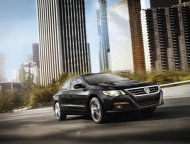
Volkswagon CC (2009-10)
Claim frequency: 0.6
Average loss payment per claim: $7,098
Vehicle size/type: Midsize car

Chevrolet Equinox (2010)
Claim frequency: 0.6
Average loss payment per claim: $2,069
Vehicle size/type: Midsize SUV
(The Chevrolet Equinox and the Chevrolet Equinox 4WD are the same car with different features.)

Mercury Mariner
Claim frequency: 0.5
Average loss payment per claim: $1,970
Vehicle size/type: Small SUV

Audi A6 4WD
Claim frequency: 0.5
Average loss payment per claim: $16,882
Vehicle size/type: Large luxury car

In addition to having better immobilizers, Hazelbaker attributed Audi's disfavor to its appearance; along with its luxury counterparts the Lexus RX350 and the BMW 5 series, availability issues also prevent theft. For instance, he says, these cars "are more likely to be spending the night in a suburban garage" than on a city street.

Honda Announces Global Recall of Nearly 1 Million Vehicles (BLOG)

Honda announced Monday that it would recall about 960,000 vehicles globally for problems with the window switches and hybrid powertrains.

In the U.S., the affected models are primarily the CR-V and CR-Z hybrid. For the CR-V crossover, 80,111 units from model year 2006 are affected by a problem that leads to residue from cleaners building up on the power-window master switch, damaging the electrical contacts and possibly leading to a fire.

Cops snag $2 million worth of street racing supercars in huge bust (BLOG)

With abundant wildlife and crystal-clear freshwater lakes, Canada has some of the most impressive stretches of untouched wilderness left on the face of the Earth. But the country also has highways, fast cars, and law enforcement. Those three things came together in one of the biggest illegal street racing busts in recent memory.


Audi R8A crew of 13 speed demons were reportedly on their way to get some food when they decided to put their pricey sports cars to the test on a strip of Vancouver highway. Two vehicles formed a rolling road block to clear the way for the racers to face off. In carscarrying nameplates like Ferrari, Maserati, and Audi, the opponents put the pedal to the metal and reached speeds of over 125 mph.


With no police around to catch them in the act, bystanders and other drivers feverishly summoned law enforcement. When the cops eventually wrangled all 13 racers to the side of the road, they found that not one of the drivers was over the age of 21, and 6 of the 13 carried only "N," or Novice class licenses.


Lamborghini GallardoIn British Columbia, N class licenses require drivers to place a large N sticker on the back of their vehicles, and they are prohibited from carrying more than one passenger. Run-ins with the law are especially critical for N class drivers, and any single infraction can mean immediate suspension of driving privileges and a reboot of the progress they've made towards a full drivers license.


Along with handing out fines of nearly $200 to each participant for "Driving without Reasonable Consideration," and all 13 of the high-dollar street machines were confiscated by the Royal Canadian Mounted Police. Totaling over $2 million, the vehicles are now impounded for an unspecified amount of time. Here is a full list of the cars, along with their base retail price:
2005 Aston Martin DB9 - $155,000
2009 Audi R8 - $110,000
2007 Ferrari 599 - $270,000
2010 Lamborghini Gallardo - $202,000
2009 Lamborghini Gallardo - $198,000
2010 Maserati Turismo - $135,000
2011 Mercedes SL63 - $139,000
2011 Mercedes SLS - $183,000
2010 Nissan GT-R - $80,000
2012 Nissan GT-R - $84,000

As the police didn't actually catch the racers in the act — and had to rely on witness accounts and statements made by those involved — the youngsters will avoid more serious consequences. Had the Vin Diesel wannabes been observed by the RCMP blocking the highway and using it as a racetrack, they may have faced complete forfeiture of their expensive cars. As it stands now, they'll likely have their supercars back on the road within a few days with nothing more than $550 in fines.
[Image credit: M 93, Hertj94]

Rental Car Companies Renting Out Recalled Cars?! (Blog)

A survey of the major rental car companies by federal safety officials found that in an overwhelming number of cases, the companies are renting cars under safety recall without first fixing the defects.

According to the survey, commissioned by the National Highway Traffic Safety Administration (NHTSA), the big three in the rental car business -- Hertz, Enterprise which owns National and Alamo, and Avis/Budget -- have been letting tens of thousands of drivers go on the road without repairing defects.

Last November, NHTSA had asked the domestic car manufacturers to provide recall repair information from the car rental companies because of "incidents involving allegations of personal injury and death" allegedly caused by "safety defects" on rental vehicles.

"The bottom line shows that none of the rental car companies are doing a good job," Clarence Ditlow, executive director of the Center for Auto Safety, told ABC News.

The best overall performance came from Enterprise, but it was hardly outstanding.

In a study of 10 General Motors and Chrysler recalls, after 90 days, the company had fixed an average of only 30 percent of the cars before renting or selling them -- meaning 70 percent were not fixed when drivers took them out on the road.

For Avis/Budget, 26 percent of the cars were fixed and 74 percent were not. At Hertz, only 21 percent of the cars rented 90 days after a recall had been fixed, meaning 79 percent had not.

The study came after ABC News reported on "Good Morning America" last July on the deaths of the Houck sisters of California, 24-year old Raechel and 20-year old Jacquie, who were killed in an accident involving their Enterprise rental car. The car they were driving was a Chrysler PT Cruiser, one that a month earlier had been recalled because a possible leak in the power steering fluid could "result in an under hood fire."

The Houck's car was never fixed. Raechel and Jacquie died instantly after the PT Cruiser caught fire and hit an oncoming semi-tractor trailer on Highway 101 in Northern California. The sisters had rented the car in Santa Cruz, Calif., to visit their parents in Ventura County.

"We found out that they had rented this same car three times in that month period before they rented it to Raechel and Jacquie," Houck's family lawyer, Larry Grassini, said.

The Houcks sued Enterprise, and after a lengthy legal fight, the company admitted negligence and was required to pay $15 million in damages to the family. Now, the girls' mother Cally Houck is pushing the California legislature to pass a law requiring rental car companies to ground all recalled vehicles until they are fixed. Citing the Houck case, the Center for Auto Safety has also petitioned the Federal Trade Commission to require Enterprise to fix vehicles under recall before renting them out.

"I do not want another family to have to go through this type of ordeal," Cally Houck said.

Rental Companies Dispute Survey Findings
The rental companies dispute the survey findings and said they pick and choose which recalls are most important, and have a high rate of fix for the most serious problems. Both Avis and Enterprise noted that after a 2010 recall of Pontiac vehicles over sticking accelerator pedals, they grounded and repaired the vehicles in question before renting them out.

However, the NHTSA survey found that in the recall of a series of Chrysler vehicles with a brake problem "that could cause a crash without warning," Enterprise/National fixed 16 percent after 90 days, according to the survey, and Avis/Budget fixed 14 percent. Hertz fixed only 2.2 percent, meaning 97.8 per cent were rented or sold without being fixed.

"They cannot pick and choose," Ditlow said. "They're gambling with your life."

Hertz said it has dramatically changed its policy and told ABC News that as of last summer, it now grounds all cars recalled for any reason, and will not rent them until they are fixed -- a change of policy that grew out of the public attention drawn to the tragic case of the two sisters.

It is a position safety advocates said they hope the other rental car companies will follow. In the meantime, Ditlow said the best recourse for consumers is to simply ask rental car agents if their vehicle is subject to an outstanding safety recall.

"If they don't tell you, they're deceiving you and if they won't tell you, just go to another company, go to another counter," said Ditlow. "They're all right there in the airport, this is a free market, pick somebody who's more responsible."

Ferrari Station Wagon? Yea Its real! (BLOG)

The four-seat Ferrari 612 Scaglietti is a great car, but not our favorite Ferrari. Launched in 2004, it’s getting long in the tooth, and the curvaceous body, lacking in tension, never really grew on us. 
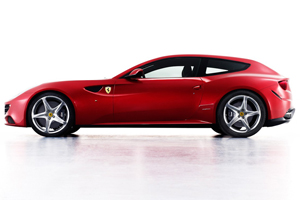
At this year’s Geneva auto show, Maranello will debut a Scaglietti successor that is not only visually exciting in a way the 612 never managed, but departs from the Ferrari gospel in two tremendous ways: It’s the first all-wheel-drive prancing horse, and it’s a two-door station wagon, or shooting brake.

Say What?!

The Pininfarina-styled four-seater folds futuristic shapes and detailing into classic front-engine proportions. The front end is dominated by a hood and headlights that are inspired by the 458 Italia, while the greenhouse sits far aft and flows into to a rear end with recessed taillights and a low tailgate. It is long (193.2 inches), wide (76.9 inches), and relatively low (54.3 inches), and to our eyes, it is absolutely stunning. The FF, says Ferrari, seats four comfortably and offers ample space for luggage.

2012 Ferrari FF
2012 Ferrari FF
The FF moniker stands for "Ferrari Four" in reference to the fact that all four of the wheels are driven. Ferrari claims that its all-wheel-drive system, called 4RM, is 50 percent lighter than comparable systems, but provides no details on how this was achieved. (RM stands for ruote motrici, so 4RM just means “four-wheel-drive” in Italian.) Regardless, the Italians have managed to keep total weight down to 3,946 pounds, no small feat given the size and power of the car. (The last 612 Scaglietti we tested was nearly 200 pounds heavier, at 4,123.)

Fifty-seven percent of that weight is perched over the rear axle. Curiously, British manufacturer Jensen built a four-seat, all-wheel-drive supercar by the name of FF in the late Sixties. The acronym then stood for Ferguson Formula, Harry Ferguson Research being the supplier of its all-wheel drive system.

Business as Usual

The shape and drivetrain layout may be unusual, but the engine is pure Ferrari: a 6.3-liter, naturally aspirated 65-degree V-12 that produces 651 hp at a screaming 8,000 rpm and 504 lb-ft of torque at 6,000. The power is channeled through a dual-clutch transmission and performance, as you would expect, should be extraordinary. Ferrari claims that zero to 60 mph will take just 3.7 seconds—we suspect that is a highly conservative guess—and top speed will be a lofty 208 mph. Magnetorheological shocks will help the FF handle, and Brembo carbon-ceramic brakes will halt it. Fuel efficiency is rated at 15.3 mpg in the European combined cycle, which is invariably more optimistic than the EPA cycles in the U.S. So don’t expect the FF to be the green Ferrari we’ve been expecting.

2012 Ferrari FF
2012 Ferrari FF
Ferrari history is peppered with Shooting Brake conversions. At the Turin auto show in 1968, coachbuilder Vignale unveiled the 330 Special. A few years later, Panther created a shooting brake based on the 365 GTB/4 Daytona. Swiss coachbuilder Felber got in on the fun with its 365 GTC/4 “Break,” introduced at in Geneva in 1977, and followed that a few years later with a conversion of the Ferrari 400 called Croisette. And, in the mid-’90s, Pininfarina built a few four-door station wagons based on the Ferrari 456 for the Sultan of Brunei. From the looks of it, though, the FF is getting the history of the official Ferrari shooting brake off to a spectacular start.

By Jens Meiners

MORE CAR BUYERS ARE GOING AMERICAN! (BLOG)


A Rasmussen Reports poll fielded in November – before General Motors' IPO – finds a rise in the preference of "American-built" vehicles, as well as a willingness to accept U.S.-built Toyota and BMW products as the same as buying an "American" product.

Forty-one percent of respondents said they look for an "American-built" car first when they're in the market for a vehicle. That sentiment is attributed by many analysts and researchers to a sense that people are showing more and more sentiment for "buying local." That's just a few points below the 44 percent who said they look for "the best possible deal regardless of where it was manufactured" while just 12 percent said they look first for a foreign-built car.

The sentiment favoring American-built car brands has risen quite a bit since Rasmussen conducted a similar poll in June 2008 when just 32 percent said they looked for an American brand first.

Good news for foreign owned automakers building vehicles in the U.S. Forty-one percent of respondents said they viewed buying a foreign brand of car that's manufactured in the U.S. as "the same as buying an 'American' product" meaning those people believe a Mexican-built Ford Fusion is just as American as an Ohio-built Honda Civic. Forty-two percent, however, dissented from that notion while the rest were unsure.

The poll also found 59 percent saying they "consider just the Detroit Big Three – Ford, General Motors and Chrysler – to be American car companies."

Fifty-four percent of Americans said they are less likely to buy a GM car because the federal government is/was the automaker's majority owner. Still, in a separate survey in early June, 48 percent of those who planned to buy a new or used car in the next year said they are at least somewhat likely to buy either a Ford or a vehicle made by GM. Those findings included 20 percent who were 'Very Likely' to buy a Ford and 26 percent 'Very Likely' to buy a GM product instead.


autoblog.com

Check These Tips to Avoid Getting scammed Buying a New Car! (BLOG)

You want to buy the Ford Fiesta, and who can blame you? It’s new, it comes in a vibrant green, and you’ll be the first on your street to get it. Now it’s time to begin the most intimidating aspect of car shopping: heading to the dealership. Unfortunately, dealers have a reputation for being weasels who want to dig into consumer pockets to squeeze out as much cash as possible. While there are good salespeople out there, you need to know what to expect before taking a seat at the negotiating table.

Below are four ways dealers dupe you into paying more for the car you want and what you can do to avoid their tricks.

Using Confusing Terms

Some dealers use industry jargon to confuse buyers, and confused buyers can end up paying more. So, how do you tell the difference between a good and a bad dealer? A good dealer will explain terms like Destination Charges to help their client understand where their money goes. Destination Charges are a form of shipping and handling and can range from $500 to $850.

Other key terms are on the car’s sticker, like the car’s manufacturer’s suggested retail price (MSRP). The MSRP is what the manufacturer considers a fair price to ask of consumers. Other key things to know aren’t on the sticker, like invoice and dealer holdback. The invoice is the price the dealer paid for the car, while dealer holdback is the invoice plus two or three percent of the MSRP. If a dealer sells a car at invoice, he’ll still make a profit, but it’s highly unlikely that a dealer will sell a car for less.

A simple way to ensure that you don’t get lost in the confusing terminology and end up overpaying is to know the average price other shoppers paid for the car you want. For example, check out Ford Fiesta pricing data, and you’ll see that most shoppers pay $13,712 for a new Fiesta sedan. That’s $392 above MSRP. Find out what fair new car prices are in your area, and don’t agree to pay a penny more.

Selling Costly Options

Dealers are in business to make money, so it’s not surprising that they’ll try to sell you additional products that you might not need. Common add-ons are dealer-installed options and extended warranties.

Not all dealer-installed options are useful. If your dealer offers you undercarriage and paint protection or fabric sealant, just say no. Cars leave the factory with all the protection they need.

Extended Warranties are a bit different -- get one if you want the peace of mind, but make sure you get one that makes sense for you. These warranties cover your car beyond the factory warranty. They can be bought by either the manufacturer -- the best, but more expensive, option -- or an independent provider like AAA. However, extended warranties aren’t cheap.

While extended warranties can be worthwhile, a lot of analysts consider them excessive. Research before signing because extended warranty down payments and deductibles vary across the industry. If you know you’ll only keep the car for the length of the factory warranty, or the car has excellent reliability ratings, you may not need one at all.

Undervaluing Your Trade-In

A good way to save some money on the price of a new car is to trade your old one in to the dealership. Watch out for dealers who try to undervalue your vehicle. Before making a trade, determine how much your car is worth based on its condition, model year, features and mileage by visiting Kelley Blue Book, which calculates the value of used cars.

Another option is to take your car to a wholesaler like Carmax. They’ll give you an offer that’s good for seven days or 300 miles. Take this appraisal to the dealership, and tell them they’ll have to beat this price to get your business. If a dealer still offers you a lot less than what you determine your car is worth, don’t be afraid to tell him that you’ll sell your car independently -- and buy a new car at another dealership.

Misleading Deals

Because it’s easy to get duped by attractive deals and incentives, it’s a good rule of thumb to always read the fine print. Certain deals -- like zero-percent APR financing for 60 months -- only apply if your credit is approved. Also, some cash back offers only apply to specific trims and models. Before heading to the dealership, make sure that the deal you’re hoping to get applies to the car you want.

Sometimes, a dealer won’t give you manufacturer’s discounts unless you ask for them. This means that you need to do the research on your own, which can save you thousands of dollars in the long run -- especially if you qualify for zero-percent financing. Begin by going to our Car Deals Page, where you can find the month’s best deals from automakers. Also, if you tell a dealer competing automakers are offering better incentives and know what they are, you’ll be more likely to get a good deal.

To avoid getting duped at the dealership, arm yourself with knowledge: the negotiating table is a battle zone. You need to save money. Dealers need to make a profit -- they’re running a business, after all -- and you represent profits. Arm yourself with information, but always be respectful. The dealer is just trying to do their job and keep their business going. But, the more you know, the more likely you’ll leave the dealership victorious.


FULL STORY HERE