Showing posts with label Apple. Show all posts

Steve Jobs out as CEO, Apple looks to the future

Since Steve Jobs' return to Apple Inc. in 1997 as CEO, the company has been on an unparalleled upswing, highlighted by the immense popularity of the iPad and iPhone.

Now, with Jobs no longer leading, Apple will have to prove it can keep its momentum. If the recent past is any indication, the company will continue to move forward.

Apple said late Wednesday that Jobs, 56, resigned from the CEO post, in a move that seems motivated by his ongoing, yet still unspecified health issues. Jobs had taken an indefinite medical leave in January, marking his third such leave in seven years. Jobs, who co-founded Apple in 1976, previously survived pancreatic cancer and received a liver transplant.

Taking on the role of board chairman, Jobs now passes the CEO role Tim Cook, 50, the company's chief operating officer. Cook had been acting CEO since January. For years, he has been running Apple's day-to-day operations, and has long been seen as the natural successor.

He also served as Apple's leader for two months in 2004 while Jobs battled cancer, and again for five-and-a-half months in 2009 when Jobs received a liver transplant. The company has thrived under Cook's leadership, briefly becoming the most valuable company in America earlier this month.

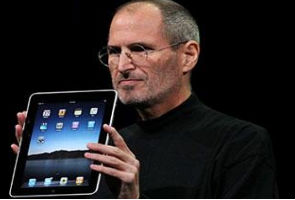
Cook is not nearly as recognizable as Jobs, who after returning from a 12-year hiatus in 1997 became the very public face of Apple, clad in his signature blue jeans, black turtleneck and wire-rimmed glasses when trotting out the company's iPhones, iPads, iPods at immensely popular and anticipated media events. Though Jobs has looked increasingly frail, he emerged from his leave twice this year to tout products at such events: First, he unveiled the second version of Apple's iPad tablet computer in March. Then, in June, he resurfaced to show off Apple's iCloud music synching service.

But while Jobs is the most recognized person at Apple, he is not the only one responsible for the company's success. Many industry watchers believe that despite his importance, Apple will continue to innovate and not just survive, but thrive.

Says Cross Research analyst Shannon Cross: "Steve Jobs put in place at Apple a culture of innovation."

And its innovation has translated to sales. With Cook running the company, Apple sold 9.25 million iPads during the most recent quarter, which ended in June, bringing sales to nearly 29 million iPads since they first began selling in April 2010. Apple also sold 20.3 million iPhones in the same period, which was millions more than analysts expected. The company's stock has risen 8 percent since Jobs announced his most recent medical leave.

During the second time, which lasted from mid-January to the end of June 2009, Apple released a new version of the iPhone and updated laptop computers on schedule. The company also announced that its iTunes app store hit a major milestone: More than one billion apps were downloaded within the first nine months of its existence.

Apple's stock rose 62% during that time, satisfying investors' concerns over Jobs' absence.

And, as Cross points out, Cook won't be leading Apple alone. His supporting team includes Jonathan Ive, who oversees the elegant, minimalist design of Apple's products; Ron Johnson, who runs Apple's stores; Philip Schiller, the marketing chief; and Scott Forstall, who supervises the iPhone software.

And consumers - the group Apple really depends on to make its products popular - may not be that affected by the change.

Apple customers don't buy the company's products because of Steve Jobs, Gartner Research analyst Michael Gartenberg says, they buy Apple products because they're Apple products. Without Jobs, he believes the company's challenge will be the same as it was with him: continuing to find ways to raise the bar with its consumer electronics.

Apple blocks Samsung from selling Galaxy tablet

The court order comes a week after Samsung was forced to delay the Australian launch of its latest Galaxy tablet because of a similar lawsuit.

Apple said Samsung’s Galaxy line of mobile phones and tablets “slavishly” copied the iPhone and iPad. It has sued in the United States, Australia and elsewhere.

Samsung, whose tablets are based on Google Inc’s Android software, has countersued Apple.

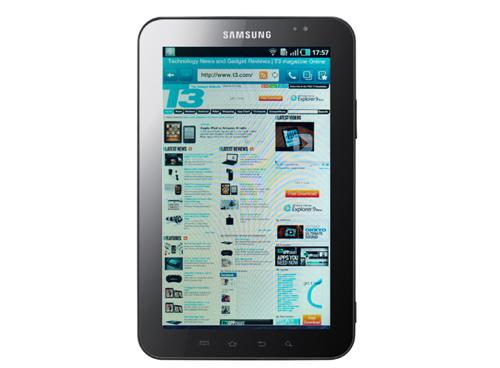
Apple Inc scored a big victory in its patent infringement battle against Samsung Electronics after a German court temporarily barred the Korean firm from selling its flagship Galaxy tablet in the European Union except the Netherlands.

“There’s no doubt the court decision will have an adverse effect on Samsung. Samsung is clashing with Apple in many places, which could result in a temporary fall in sales and increase costs related to litigation,” said Lee Seung-woo, an analyst at Shinyoung Securities in Seoul.

Apple spokeswoman Kristin Huguet confirmed that a district court in the German city of Dusseldorf granted the preliminary injunction against the Galaxy Tab 10.1. It was not immediately clear why the order did not include the Netherlands.

Samsung’s mobile unit, which includes handsets and tablet PCs, generated 30% of the technology giant’s revenue in the second quarter. The bulk of the rest comes from memory chips and televisions, sectors where Samsung is the global leader.

Samsung shares edged up 0.3% in a broader market up 0.7% after sharp falls over the past few days.

The Korean company, Asia’s biggest technology company with revenue of won 154.6 trillion Korean ($142 billion) last year, said it would challenge the court decision.

Without patents, companies’ devices are vulnerable to challenges for royalties or, worse, demands from rivals to withdraw the products from the market place.

Apple sold 14 million iPads in the first half of this year worldwide, compared with analysts’ sales estimates of about 7.5 million units for the Galaxy Tab over 2011.

Industry executives said Samsung could launch a new variation of the Galaxy Tab 10.1 to get it on sale in Europe, as it plans to do in Australia, or settle the dispute by paying royalties to Apple.

A Samsung spokesman said, in Australia, Samsung has agreed to show Apple an Australian version of the Galaxy Tab 10.1 one week before its launch there.

Samsung halts tablet sales in Australia over Apple lawsuit

Apple and Samsung continue to battle back and forth over several patent disputes, and it looks like one country is becoming a casualty.

Samsung and Apple came to an agreement in their patent dispute in Australia, under which Samsung has agreed not to advertise the Galaxy Tab 10.1 or to sell it in the country until the suit between the two companies is resolved, according to a story from TechCrunch. Samsung needs either court approval to sell its device, or for the lawsuit to come to a close under the agreement.

The agreement holds up the launch of the Galaxy Tab 10.1, which Apple says violates 10 iPad patents, according to Bloomberg. Apple is fighting Samsung in lots of different venues, including the U.S., where it is working to convince the International Trade Commission to ban imports of the South Korean company’s tab for infringing on Apple’s patents. Those patents concern both hardware internally and the external design of the tablet, which Apple has claimed in an injunction request to the ITC are evidence of Samsung copying Apple’s device.

Samsung has said the Australian Galaxy Tab 10.1 will be different from the U.S. version, the one Apple has sued over. It’s possible, perhaps likely, that Samsung has made changes in the design to dodge Apple’s legal strafing in order to be able to sell the device with impunity. For Samsung though, an Australian judge will still need to take a look at the device before the company is free to sell it in Australia right now.

Samsung’s legal team has also said that Apple will be able to review three of the Australian Galaxy Tabs at least a week before they’re set to go on sale in the country to verify that they are as different as Samsung has claimed.

But the legal battle remains a mess in other places, where Apple has sued Samsung  and has countersued. And the battle is a big deal, with a lot of money at stake – Samsung and Apple currently lead the smartphone markets, and Samsung’s tab is certainly capable of taking the lead on the Android side of the market.

Unfortunately, the Australian developments in the case don’t shed any additional light on how things will shake out in any other part of the world. Apple and Samsung remain in a death grip awaiting the rulings of judges – and those rulings will undoubtedly have a big impact on both companies’ businesses.